Elevated Liver Enzymes on a Routine Blood Test: What ALT and AST Actually Mean
An elevated ALT or AST result does not automatically mean you have serious liver disease. Learn what these liver enzymes mean, why they can rise, and when abnormal results need further evaluation.
 Written and reviewed by Dr. James Kumar Pallivathukkal, Specialist in Internal Medicine and DiabetesPublished 11 Oct 2026 · Reviewed by Dr. James Kumar Pallivathukkal on 11 October 2026 · 4 min readWhatsApp
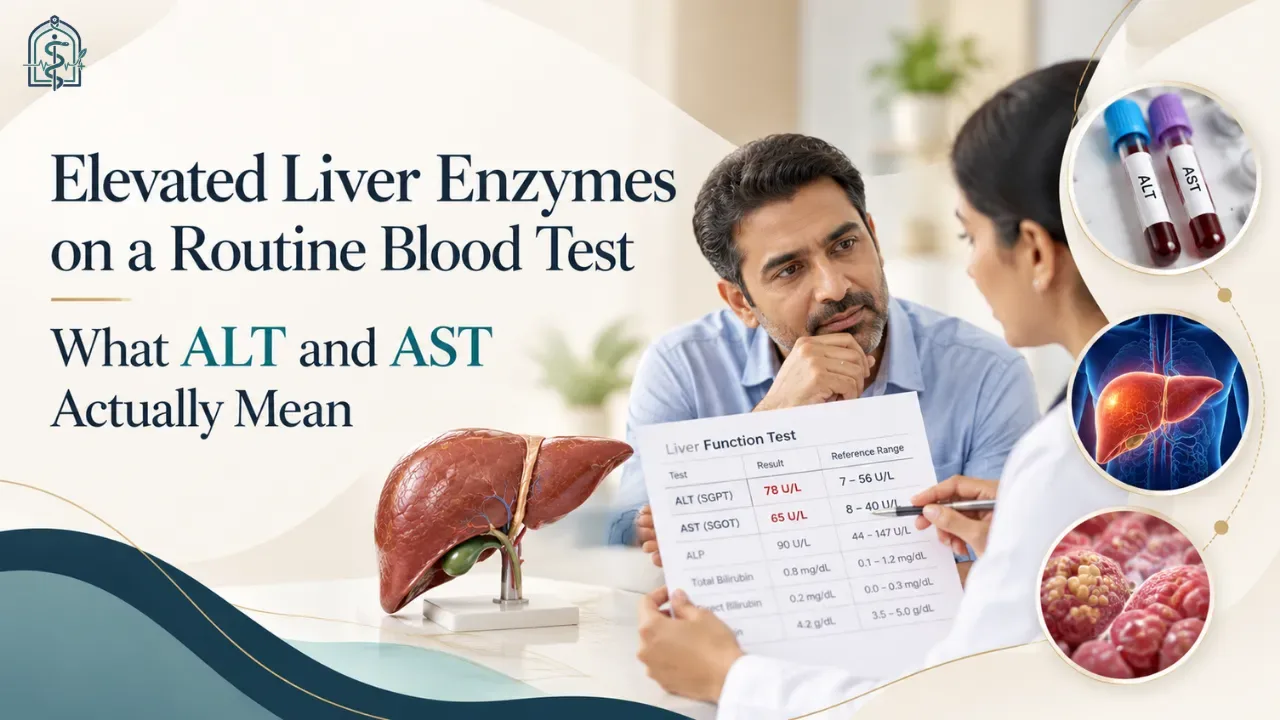
ALT and AST are enzymes that can rise when liver cells are stressed or injured. A raised result does not automatically mean serious liver disease. Common causes include fatty liver, viral hepatitis, alcohol, and some medicines or supplements. Your doctor will look at the full picture and may repeat the test or arrange more checks.
In this guide
What Are ALT and AST?
If a routine blood test shows elevated ALT or AST, it is understandable to feel concerned. But an abnormal liver enzyme result does not automatically mean that you have serious liver disease.
ALT (alanine aminotransferase) and AST (aspartate aminotransferase) are enzymes found inside cells. ALT is found mainly in the liver, while AST is also present in other tissues, including muscles and the heart.
When cells are injured or stressed, these enzymes can enter the bloodstream and their levels may rise.
What Does a High ALT Mean?
ALT is more closely associated with the liver than AST. An elevated ALT can occur when liver cells are irritated or damaged.
Possible causes include:
-
Viral hepatitis
-
Alcohol-related liver injury
-
Certain medicines or supplements
-
Other liver conditions
However, the ALT number alone cannot identify the exact cause.
The degree of elevation, other blood-test results, medical history, medications, alcohol use, and symptoms all need to be considered.
What Does a High AST Mean?
AST can also rise when liver cells are affected, but it is not specific to the liver.
Muscle injury or strenuous physical activity can sometimes contribute to an elevated AST. Other medical conditions can also affect the result.
This is why doctors usually interpret AST together with ALT and other liver tests rather than looking at AST in isolation.
ALT vs AST: Why Both Matter
Looking at the pattern of liver-test abnormalities can provide more information than a single result.
Your doctor may also review tests such as bilirubin, alkaline phosphatase, albumin, and other markers depending on your situation.
The pattern can help determine whether the results suggest liver-cell injury, a problem involving bile flow, or another cause.
Does an Elevated Result Mean Liver Disease?
Not necessarily.
Temporary enzyme elevations can occur for different reasons, and some people with liver disease may have only mild abnormalities or even normal enzyme levels at a particular point in time.
For this reason, liver enzymes should not be used alone to determine the severity of liver disease.
Your doctor may repeat the blood tests, review your medicines and supplements, assess metabolic risk factors, or recommend imaging or additional testing when appropriate.
What Should You Do If Your Liver Enzymes Are High?
Do not panic based on a single abnormal result.
Instead, discuss the result with your healthcare professional. Tell them about all medicines, supplements, and herbal products you take. Your doctor may also ask about alcohol intake, weight changes, diabetes, and other health conditions.
Do not stop prescribed medication without medical advice simply because your liver enzymes are elevated.
Seek medical attention promptly if abnormal liver tests occur with symptoms such as yellowing of the skin or eyes, severe abdominal pain, persistent vomiting, confusion, or significant drowsiness.
When to See a Doctor
Talk to your doctor if a routine test shows high ALT or AST, especially if the result persists. Seek urgent care for yellow skin or eyes, dark urine, severe abdominal pain or persistent vomiting.
You may also find these guides helpful: NAFLD, MASLD, MASH: Why Fatty Liver Disease Has So Many Names Now, Can Fatty Liver Disease Be Reversed? A Step-by-Step Guide to Protecting Your Liver, Primary Care Doctor or Liver Specialist? Who Should Manage Your Fatty Liver Diagnosis.
Final Thoughts
An elevated ALT or AST result is a finding, not a diagnosis. While abnormal liver enzymes can sometimes indicate liver injury, they can also occur for other reasons. The most useful next step is to have the results interpreted in the context of your overall health, medications, symptoms, and other tests. If your liver enzymes remain elevated, appropriate evaluation can help identify the cause and determine whether further monitoring or treatment is needed.
This article is for general information and does not replace personal medical advice.
If a test result points toward your liver, our page on fatty liver disease explains how it is assessed and managed.
Kidney, liver and gut in Muscat: when to see an internist
Dr. James sees adults with fatty liver at Badr Al Samaa Royal Hospital, Al Ghubrah, by appointment.

Key takeaways
- ALT and AST are enzymes that can rise when cells are injured or stressed.
- ALT is more closely associated with the liver, while AST can also come from muscles and other tissues.
- Elevated liver enzymes have many possible causes.
- A single abnormal result does not automatically mean serious liver disease.
- Doctors interpret ALT and AST alongside other liver tests and your medical history.
- Further testing may be needed to identify the cause of persistent abnormalities.
Common questions
What does high ALT mean?
A high ALT can indicate irritation or injury to liver cells, but it does not identify the exact cause by itself. Fatty liver disease, hepatitis, medicines, supplements, and other conditions can cause ALT to rise.
What does high AST mean?
AST can increase when liver cells are affected, but it is also found in muscles and other tissues. Therefore, an elevated AST does not necessarily mean that the problem is coming from the liver.
Is elevated ALT always caused by fatty liver?
No. Fatty liver is one possible cause, but elevated ALT can also occur with viral hepatitis, alcohol-related liver injury, certain medicines, supplements, and other conditions.
Should I worry about slightly high liver enzymes?
A mild rise is common and often has a treatable cause such as fatty liver or a medicine. It should still be followed up, because the cause matters.
Can medicines or supplements raise liver enzymes?
Yes. Some prescription medicines, herbal products and supplements can affect the liver. Tell your doctor everything you take. This includes common painkillers, cholesterol medicines and some gym or herbal supplements.
Sources
- NHS: Non-alcoholic fatty liver disease · nhs.uk
- NIDDK: NAFLD and NASH · niddk.nih.gov
This guide is for general information and does not replace a consultation. Editorial and medical review policy

More in this guide series
 Fatty Liver Disease: Causes, Symptoms & How to Reverse It
 NAFLD, MASLD, MASH: Why Fatty Liver Disease Has So Many Names Now
 Can Fatty Liver Disease Be Reversed? A Step-by-Step Guide to Protecting Your Liver
 New Medication Options for Advanced Fatty Liver Disease: What Patients Should Know
 Primary Care Doctor or Liver Specialist? Who Should Manage Your Fatty Liver Diagnosis