
High blood pressure
High blood pressure rarely causes symptoms, but over years it strains the heart, brain and kidneys. Dr. James first confirms your real readings, then treats the cause and the number together.
Who should see an internist about this
- Clinic or home readings are repeatedly above 140 over 90.
- You take blood pressure medicine and want the dose or side effects reviewed.
- Your readings swing a lot, or stay high despite treatment.
- You have diabetes, kidney disease, high cholesterol or a family history of early heart disease.
- You want a proper baseline check because you have never measured it.
What happens at your visit
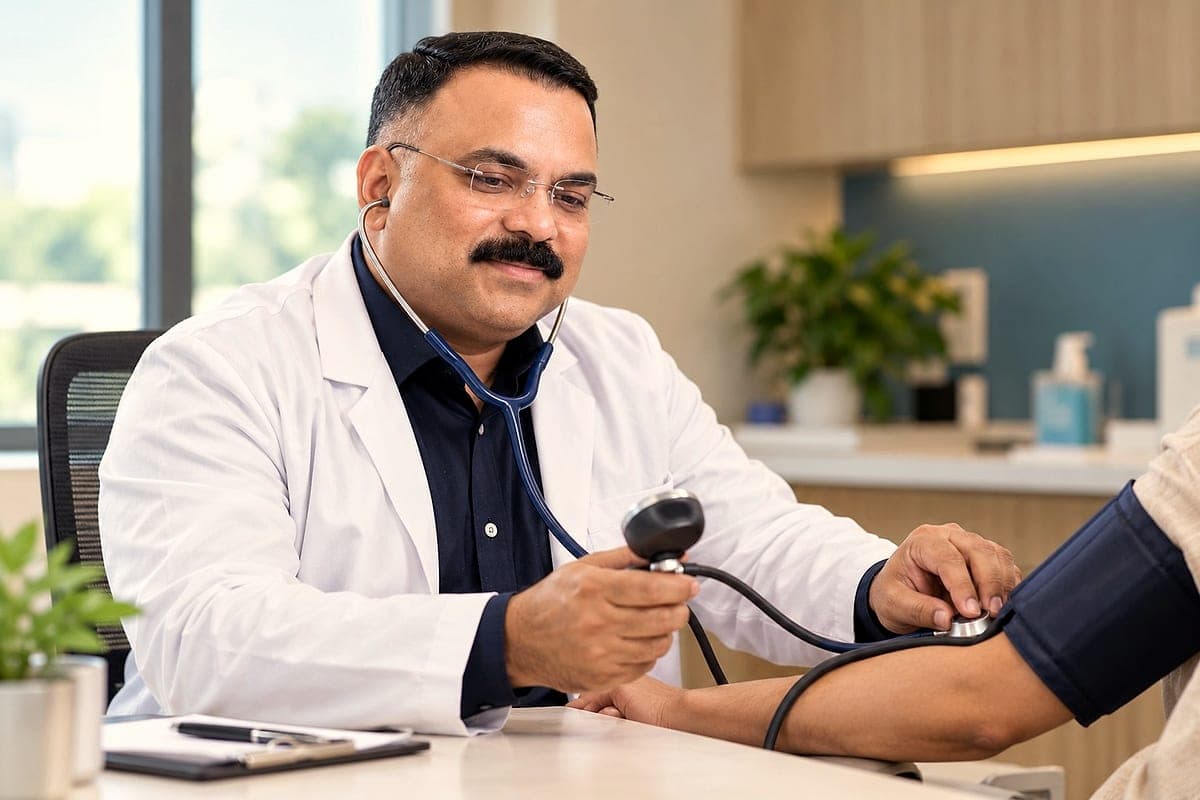
Dr. James asks about salt, sleep, stress, alcohol, medicines and family history, then measures your pressure properly in both arms after rest. He examines your heart and checks for signs that pressure has already affected the eyes, heart or kidneys.
He may ask for home readings over a week, basic kidney and sugar tests, and an ECG (a heart tracing). The aim is to confirm whether the pressure is truly high, find what is driving it, and set a realistic target.
How to prepare
- Bring all your medicines and any home blood pressure readings.
- Bring older reports, especially kidney, sugar and cholesterol tests.
- Avoid coffee, energy drinks and smoking for at least an hour before the visit, because they push readings up.
After your visit
You leave with a clear target and the plan to reach it: food and salt guidance, activity, and medicines if needed. Follow-up visits are scheduled until the pressure is steady at target, then spaced out. Small questions between visits are answered on WhatsApp or by phone.
When to get help straight away
Blood pressure needs urgent care when it comes with symptoms. Go to the nearest emergency department if you have a severe headache with blurred vision, chest pain, sudden breathlessness, weakness on one side, or confusion. Do not drive yourself in that situation.
Common questions
What blood pressure is considered high?
As a guide, clinic readings of 140 over 90 or higher, or home readings of 135 over 85 or higher, are usually treated as high. One high reading alone does not mean disease, which is why repeated or home measurements matter before deciding.
My pressure is high only at the clinic. Does it matter?
This is called white coat effect, and it is common. Home readings or a 24-hour monitor show your true pressure. Dr. James may ask you to measure at home for a week so treatment is based on your real numbers, not on clinic nerves.
Do I have to take tablets every day?
If your pressure is confirmed high and lifestyle change alone is not enough, daily tablets protect your heart, brain and kidneys quietly in the background. Skipping days makes the pressure swing, which is worse than a steady level.
Can I stop the medicine once my readings are normal?
Normal readings on treatment mean the medicine is working, not that the problem is gone. Stopping usually lets the pressure rise again. If your readings stay low for a long time, the dose can sometimes be reduced under review.
What raises blood pressure besides salt?
Extra weight, poor sleep, sleep apnea, alcohol, some painkillers, decongestants, liquorice, kidney problems and stress can all push it up. Part of the visit is hunting for these, because fixing a cause can lower pressure without extra medicine.


