
Heart risk assessment
Heart disease is often silent until it is serious. A heart risk assessment puts your blood pressure, cholesterol, sugar, family history and habits together into one honest picture, then works on what can be changed.
Who should see an internist about this
- A parent, brother or sister had a heart attack or stroke, especially before 60.
- You have diabetes, high blood pressure, high cholesterol, or you smoke.
- You are over 40 and have never had your heart risk measured.
- You want to start a fitness programme after a long inactive period.
- You get chest discomfort, breathlessness or palpitations on effort and want it checked.
What happens at your visit
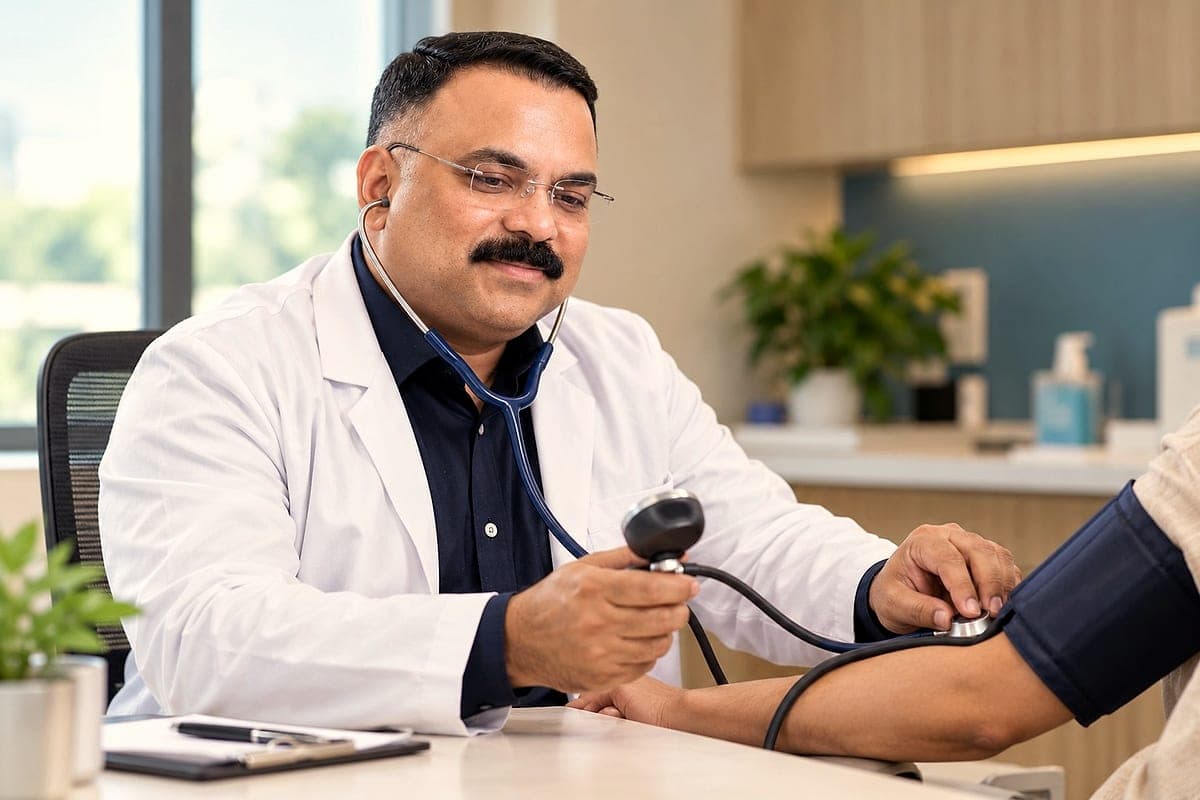
Dr. James takes a full history: family heart events, smoking, diet, activity, stress and any symptoms like chest tightness, breathlessness or palpitations. He measures your blood pressure, weight and waist, listens to your heart, and reviews or orders the relevant blood tests and an ECG if indicated.
Your results are then combined into a plain answer: low, medium or high risk, and which factors are doing most of the damage. You discuss which changes give you the largest benefit first.
How to prepare
- Bring older reports of cholesterol, sugar and blood pressure.
- Bring your medicine and supplement list.
- Ask when booking whether fasting is needed, in case a fresh cholesterol or sugar test is taken.
After your visit
You leave with your risk level explained and a short, prioritised plan: which numbers to improve first and how. Recheck dates are set so progress is measured, not assumed. If a finding needs a heart specialist's opinion, that is discussed openly and referred appropriately.
When to get help straight away
Chest pain is an emergency when it is heavy, crushing or spreads to the arm, jaw or back, especially with sweating, sickness or breathlessness. Go to the nearest emergency department immediately. Do not wait to see if it passes, and do not drive yourself.
Common questions
Who should have a heart risk assessment?
Anyone over 40 benefits, and earlier if you have diabetes, smoke, carry extra weight, or a close relative had a heart attack or stroke before age 60. It is also sensible before starting a demanding exercise programme after long inactivity.
Which tests are usually included?
Typically blood pressure, cholesterol profile, sugar or HbA1c, kidney function, weight and waist, and an ECG heart tracing when indicated. Dr. James decides the right tests for you after examining you, so nothing is ordered without a reason.
Can heart disease really be prevented?
A large part of it, yes. Blood pressure, cholesterol, sugar, smoking, weight and activity account for most heart risk, and every one of them can be improved. The earlier you know your numbers, the more protection you get from changing them.
I feel healthy. Why should I check?
Because the risk factors that cause heart attacks, like high pressure, cholesterol and sugar, usually cause no symptoms at all. Feeling fine and being low risk are not the same thing. A short check tells you which one you are.
What happens if my risk comes back high?
High risk does not mean heart disease is certain. It means prevention matters more for you. The plan then focuses on the factors raising your risk most, with rechecks to prove the changes are working.
Related areas of expertise


From the Health Library: heart disease warning signs