
Fatty liver
Fatty liver means fat has built up inside the liver, usually quietly, found on an ultrasound or through raised liver enzymes on a blood test. It is common, closely tied to weight, sugar and cholesterol, and usually improves when those are treated.
Who should see an internist about this
- An ultrasound report mentioned fatty liver or increased liver echogenicity.
- Liver enzymes (ALT, AST, GGT) came back raised on a blood test.
- You have diabetes, prediabetes, high cholesterol or central weight gain.
- You want to know whether your liver needs monitoring or specialist review.
What happens at your visit
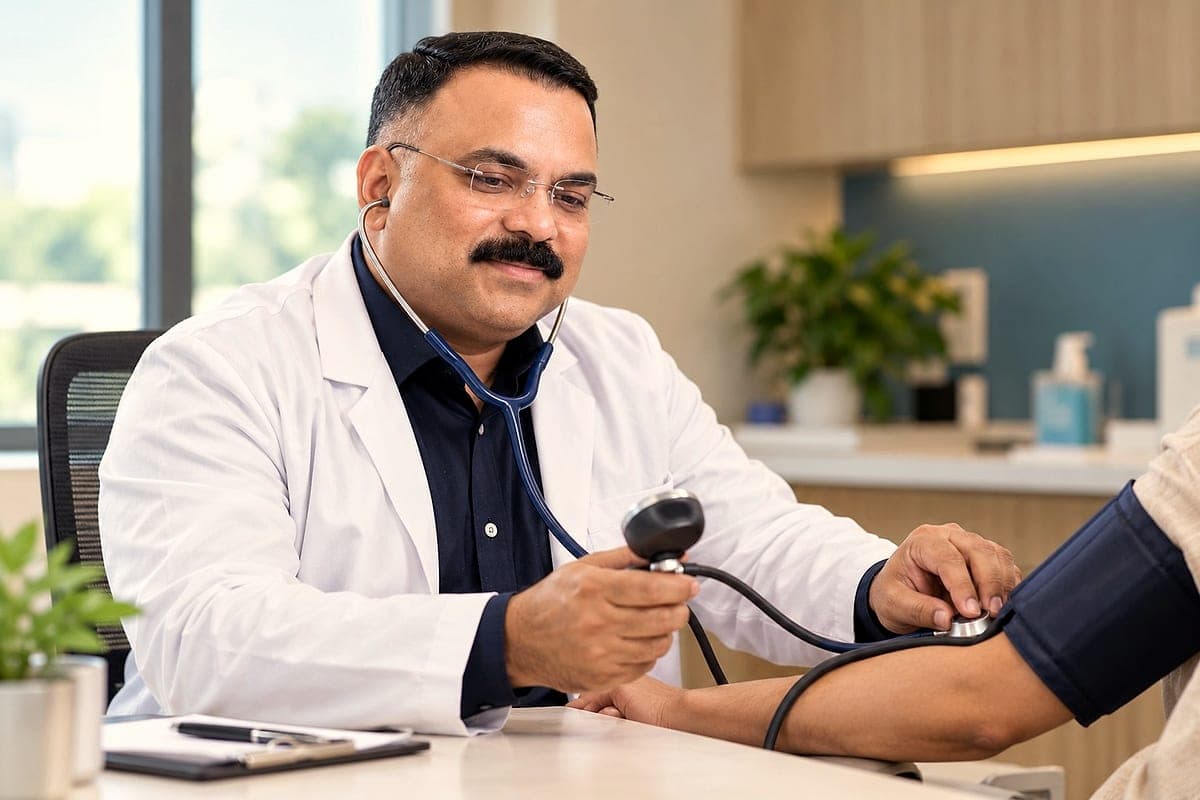
Dr. James asks about alcohol honestly, medicines and supplements, weight history, and your diabetes and cholesterol picture. He examines your abdomen and reviews your liver tests and any ultrasound report.
The job at this visit is twofold: confirm that fat is the likely explanation and rule out other causes like viral hepatitis, and estimate how much the liver is affected. Most people can then be managed with a plan targeting the drivers.
How to prepare
- Bring all liver blood reports and ultrasound or scan reports.
- Bring your medicine and supplement list, including herbal products.
- Be ready to discuss alcohol intake honestly; it changes the interpretation completely.
After your visit
You leave knowing what the liver finding means for you, which other causes have been excluded, and the plan: weight and sugar targets, a recheck date for liver tests, and whether a scan or specialist opinion is needed. Progress is measured on repeat tests, not guessed.
Common questions
I do not drink alcohol. How did I get fatty liver?
Most fatty liver is non-alcoholic, driven by insulin resistance, extra weight, diabetes and high cholesterol rather than alcohol. It is now one of the most common liver findings on routine scans, especially in people with diabetes or prediabetes.
Is fatty liver dangerous?
Simple fat alone often stays harmless, but in some people it inflames the liver and slowly scars it. The point of assessment is finding out which group you are in and keeping you in the safe one, mainly through weight, sugar and cholesterol control.
Can fatty liver be reversed?
Often, yes. Losing 7 to 10 percent of body weight improves liver fat substantially, and bigger losses can reduce inflammation too. The improvement shows up on repeat liver tests within months of sustained change.
What do ALT and AST mean on my report?
They are enzymes that leak from liver cells into the blood when the liver is irritated. Mild rises are common with fatty liver, but alcohol, viral hepatitis and some medicines cause them too, so the cause is checked before blaming fat.
Do I need medicines for fatty liver?
There is no tablet that removes liver fat directly. Treatment targets the drivers: weight, sugar, cholesterol and pressure. Dr. James decides the right tests and treatment for you after examining you, including checking for other liver causes first.


