Gastritis vs Acid Reflux: What Is the Difference Between the Symptoms?
Gastritis and acid reflux can both cause upper digestive discomfort, but they affect the body differently.
 Written and reviewed by Dr. James Kumar Pallivathukkal, Specialist in Internal Medicine and DiabetesPublished 23 Oct 2026 · Reviewed by Dr. James Kumar Pallivathukkal on 23 October 2026 · 4 min readWhatsApp
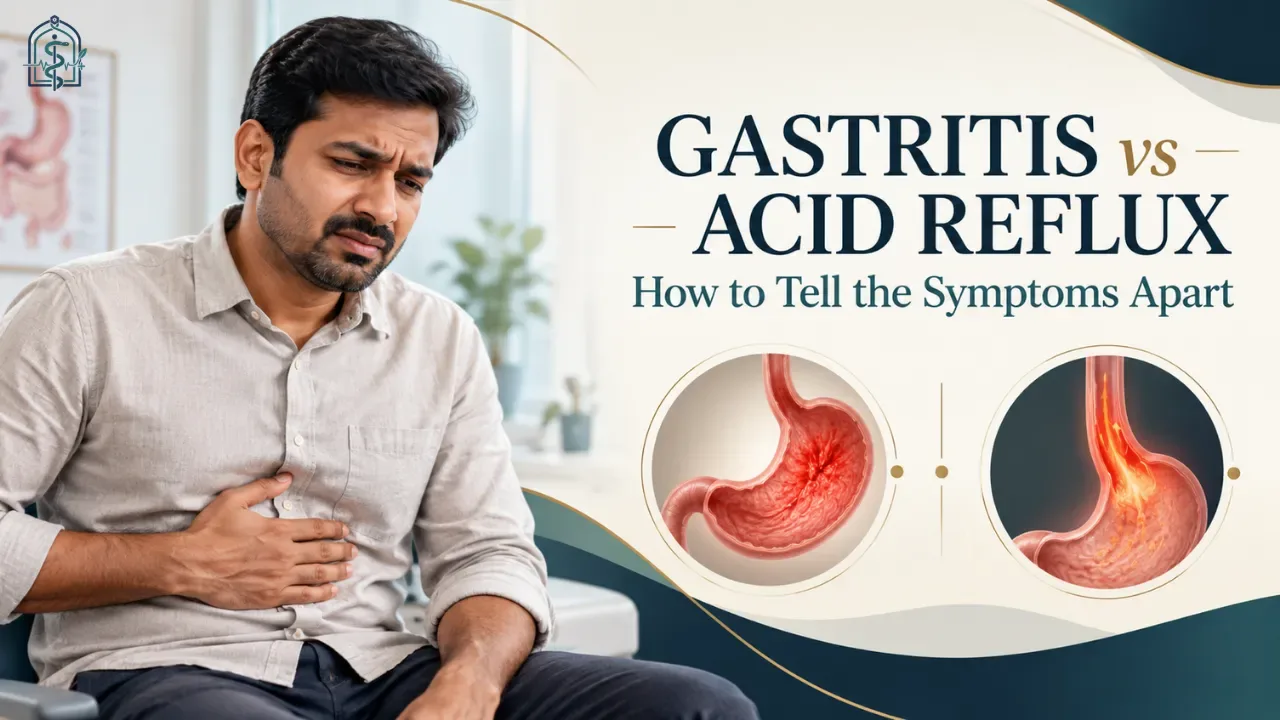
Gastritis is inflammation of the stomach lining and usually causes upper abdominal discomfort, nausea and bloating. Acid reflux happens when stomach acid moves back up, causing heartburn, a sour taste and regurgitation, often worse when lying down. They can overlap, so a doctor may need to assess your symptoms to tell them apart.
In this guide
- 1Gastritis and Acid Reflux Are Not the Same
- 2Gastritis Symptoms: What Does It Feel Like?
- 3What Causes Gastritis?
- 4Acid Reflux Symptoms: How Are They Different?
- 5Why Does Acid Reflux Happen?
- 6Gastritis vs Acid Reflux: The Main Difference
- 7How Do Doctors Tell Them Apart?
- 8When Should You See a Doctor?
- 9Final Thoughts
Gastritis and Acid Reflux Are Not the Same
For the wider picture, see our guide on Abdominal Pain Causes & Gastritis: Symptoms and Treatment.
Gastritis and acid reflux are often confused because both can cause discomfort in the upper digestive system. However, they are different conditions.
Gastritis involves inflammation of the stomach lining, while acid reflux occurs when stomach contents flow backward into the esophagus, the tube connecting your mouth to your stomach.
Because their symptoms can overlap, the location and nature of your discomfort can provide clues, but they cannot confirm the diagnosis by themselves.
Gastritis Symptoms: What Does It Feel Like?
Gastritis may cause pain or discomfort in the upper abdomen, often described as burning, aching, or gnawing.
Other possible symptoms include:
-
Nausea
-
Vomiting
-
Bloating
-
Indigestion
-
Feeling full quickly
-
Reduced appetite
Some people with gastritis may have few or no symptoms.
What Causes Gastritis?
One important cause is Helicobacter pylori (H. pylori) infection. Certain painkillers called nonsteroidal anti-inflammatory drugs (NSAIDs), including ibuprofen and naproxen, can also irritate the stomach lining.
Other causes depend on the individual's health and circumstances.
Finding the underlying cause is important because treatment should address the reason for the stomach inflammation.
Acid Reflux Symptoms: How Are They Different?
Acid reflux typically causes heartburn, a burning sensation behind the breastbone that may move upward toward the throat.
Other symptoms can include:
-
Sour or bitter taste in the mouth
-
Regurgitation of stomach contents
-
Burning after meals
-
Symptoms that become worse when lying down
-
Difficulty swallowing in some cases
-
Chronic cough or throat irritation in some people
Acid reflux can occur occasionally, but frequent or troublesome symptoms may indicate gastroesophageal reflux disease (GERD).
Why Does Acid Reflux Happen?
Acid reflux can occur when the barrier between the stomach and esophagus does not prevent stomach contents from moving upward effectively.
Certain foods, large meals, lying down soon after eating, excess body weight, pregnancy, and some medications can contribute to reflux symptoms in some people.
However, triggers vary between individuals.
Gastritis vs Acid Reflux: The Main Difference
The simplest way to understand the difference is:
Gastritis affects the stomach lining. Acid reflux affects the movement of stomach contents into the esophagus.
Gastritis tends to cause upper abdominal discomfort, while acid reflux more commonly causes burning behind the breastbone or symptoms that travel toward the throat.
However, a person can have both conditions at the same time, and symptoms can overlap.
How Do Doctors Tell Them Apart?
Your doctor may ask about the location, timing, duration, and nature of your symptoms.
They may also ask about medications, alcohol use, diet, previous digestive problems, and other health conditions.
Depending on the symptoms, testing for H. pylori may be considered. Some patients may require an upper gastrointestinal endoscopy, particularly when there are concerning symptoms or when the diagnosis remains uncertain.
Treatment should be based on the underlying condition rather than symptoms alone.
When Should You See a Doctor?
Occasional mild indigestion or reflux may not require immediate medical attention. However, persistent or recurrent symptoms should be discussed with a healthcare professional.
Seek urgent medical attention for vomiting blood, black or bloody stools, severe or rapidly worsening abdominal pain, fainting, or severe weakness.
Chest pain should also not automatically be assumed to be acid reflux. If chest discomfort is severe, new, or associated with breathlessness, sweating, nausea, or other concerning symptoms, seek urgent medical assessment.
You may also find these guides helpful: Gastritis Symptoms: What Does Gastritis Pain Feel Like and Where Does It Hurt?, How Is Gastritis Treated? Causes, Tests and Lifestyle Measures That May Help, What Causes Abdominal Pain? Common Causes by Location, Timing and Symptoms.
Final Thoughts
Gastritis and acid reflux can feel similar, but they involve different parts and processes within the digestive system. Gastritis primarily affects the stomach lining, while acid reflux involves stomach contents moving back into the esophagus. If symptoms continue, repeatedly return, or interfere with your daily life, a medical evaluation can help determine the actual cause and guide appropriate treatment. Avoid assuming that every episode of upper abdominal or chest discomfort is simply "acidity."
This article is for general information and does not replace personal medical advice.
Kidney, liver and gut in Muscat: when to see an internist
Dr. James sees adults with digestive problems at Badr Al Samaa Royal Hospital, Al Ghubrah, by appointment.

Key takeaways
- Gastritis and acid reflux are different digestive conditions.
- Gastritis involves inflammation of the stomach lining.
- Acid reflux occurs when stomach contents flow backward into the esophagus.
- Gastritis commonly causes upper abdominal discomfort, nausea, or indigestion.
- Acid reflux more commonly causes heartburn, regurgitation, or a sour taste.
- Some people can have both conditions at the same time.
- Persistent symptoms may require medical evaluation and, in some cases, testing.
Common questions
What is the main difference between gastritis and acid reflux?
Gastritis is inflammation of the stomach lining, while acid reflux occurs when stomach contents flow backward into the esophagus. Their symptoms can overlap, but they are different conditions.
Does gastritis cause heartburn?
Gastritis primarily causes upper abdominal discomfort, nausea, or indigestion. Heartburn is more characteristic of acid reflux, although digestive symptoms can overlap between conditions.
Where does acid reflux pain usually occur?
Acid reflux commonly causes a burning sensation behind the breastbone, known as heartburn. The sensation may rise toward the throat and may be accompanied by a sour or bitter taste.
Can gastritis and acid reflux occur together?
Yes. They are different conditions but can occur together, which is why assessment by a doctor is helpful. Reflux can coexist with gastritis from H. pylori or painkillers, so ongoing upper gut symptoms are worth a proper look rather than repeated antacids.
Do I need tests to tell gastritis from reflux?
Not always. Your doctor often decides from your symptoms, and may suggest tests such as H. pylori testing or an endoscopy if symptoms persist or warning signs are present.
Sources
- NIDDK: Gastritis · niddk.nih.gov
- NIDDK: Acid reflux (GER and GERD) · niddk.nih.gov
This guide is for general information and does not replace a consultation. Editorial and medical review policy

More in this guide series
 Abdominal Pain Causes & Gastritis: Symptoms and Treatment
 What Causes Abdominal Pain? Common Causes by Location, Timing and Symptoms
 Gastritis Symptoms: What Does Gastritis Pain Feel Like and Where Does It Hurt?
 How Is Gastritis Treated? Causes, Tests and Lifestyle Measures That May Help
 When Is Abdominal Pain Serious? Warning Signs You Should Not Ignore