What Causes Abdominal Pain? Common Causes by Location, Timing and Symptoms
Abdominal pain can come from many different conditions, ranging from indigestion and constipation to gallstones, kidney problems, infections, or appendicitis.
 Written and reviewed by Dr. James Kumar Pallivathukkal, Specialist in Internal Medicine and DiabetesPublished 22 Oct 2026 · Reviewed by Dr. James Kumar Pallivathukkal on 22 October 2026 · 4 min readWhatsApp

Abdominal pain has many causes, from indigestion and constipation to gallstones, kidney stones, infections or appendicitis. Where the pain is, when it happens and which other symptoms come with it give important clues. Severe, worsening or persistent pain, especially with fever, vomiting or blood, needs medical assessment.
In this guide
- 1What Can Cause Abdominal Pain?
- 2Abdominal Pain by Location
- 3Upper Abdomen
- 4Lower Right Abdomen
- 5Lower Left Abdomen
- 6Pain Around the Middle of the Abdomen
- 7Timing and Pattern Can Provide Clues
- 8Other Symptoms Matter
- 9When Is Abdominal Pain an Emergency?
- 10How Is the Cause Diagnosed?
- 11Don't Ignore Persistent Abdominal Pain
- 12Final Thoughts
What Can Cause Abdominal Pain?
For the wider picture, see our guide on Abdominal Pain Causes & Gastritis: Symptoms and Treatment.
Abdominal pain is a common symptom, but its cause is not always obvious. Pain can come from the stomach, intestines, gallbladder, liver, pancreas, kidneys, urinary tract, or other structures inside or around the abdomen.
The location, timing, severity, and associated symptoms can provide useful clues. However, these features alone cannot reliably diagnose a condition.
Mild abdominal discomfort may result from indigestion or constipation, while sudden or severe pain can sometimes indicate a condition requiring urgent medical attention.
Abdominal Pain by Location
Upper Abdomen
Pain in the upper abdomen may be associated with digestive problems such as indigestion, gastritis, or an ulcer. Pain in the upper right abdomen can also occur with gallbladder or liver problems.
Upper abdominal pain that is severe, persistent, or associated with vomiting, fever, jaundice, or chest discomfort should be medically assessed.
Lower Right Abdomen
Pain in the lower right abdomen can have several causes. Appendicitis is an important condition doctors consider, particularly when pain becomes progressively worse and is accompanied by nausea, vomiting, fever, or loss of appetite.
Other digestive, urinary, or reproductive conditions can cause pain in the same area.
Lower Left Abdomen
Pain on the lower left side can occur with constipation or other bowel problems. In some adults, particularly older adults, diverticular disease or diverticulitis may cause localized lower abdominal pain, sometimes accompanied by fever or changes in bowel habits.
Pain Around the Middle of the Abdomen
Pain around the belly button can occur with several digestive conditions. In some cases of appendicitis, discomfort may initially begin around the navel before moving toward the lower right abdomen.
Location can change as a condition develops, which is one reason persistent or worsening pain should not be self-diagnosed.
Timing and Pattern Can Provide Clues
The timing of abdominal pain can also be useful.
Pain that occurs after eating may be related to digestion, while cramping that comes and goes can occur with bowel problems. Pain that repeatedly wakes you from sleep or continues for a prolonged period deserves medical attention.
Sudden, severe abdominal pain is particularly important because some urgent conditions can begin abruptly.
Other Symptoms Matter
Doctors will usually ask about symptoms occurring alongside the pain, such as:
-
Fever
-
Vomiting
-
Diarrhoea or constipation
-
Bloating
-
Loss of appetite
-
Blood in the stool or vomit
-
Painful urination
-
Yellowing of the skin or eyes
-
Unexplained weight loss
These details can help narrow down the possible causes.
When Is Abdominal Pain an Emergency?
Not every stomach ache requires emergency care, but certain symptoms should not be ignored.
Seek urgent medical attention for severe or rapidly worsening abdominal pain, significant abdominal swelling, persistent vomiting, vomiting blood, black or bloody stools, fainting, confusion, or severe weakness.
Severe abdominal pain during pregnancy or pain accompanied by chest pain or difficulty breathing also requires prompt medical assessment.
How Is the Cause Diagnosed?
A doctor may ask when the pain started, where it is located, whether it moves, what makes it better or worse, and which other symptoms are present.
The physical examination may be followed by blood or urine tests, ultrasound, X-ray, CT, or other investigations when clinically appropriate.
The right test depends on the suspected cause rather than being the same for everyone.
Don't Ignore Persistent Abdominal Pain
If abdominal pain keeps returning, lasts longer than expected, or is gradually becoming worse, arrange a medical evaluation.
Avoid repeatedly taking painkillers to mask unexplained pain without understanding the underlying cause. Some medications can also irritate the stomach or affect the kidneys in certain circumstances.
You may also find these guides helpful: When Is Abdominal Pain Serious? Warning Signs You Should Not Ignore, Gastritis Symptoms: What Does Gastritis Pain Feel Like and Where Does It Hurt?, Gastritis vs Acid Reflux: What Is the Difference Between the Symptoms?.
Final Thoughts
Abdominal pain is a symptom rather than a diagnosis, and its cause cannot always be determined from location alone. Paying attention to when the pain occurs, how it changes, and which other symptoms accompany it can provide useful information for your doctor. If pain is severe, worsening, persistent, or associated with warning signs such as bleeding or fainting, seek medical attention promptly rather than trying to manage it at home.
This article is for general information and does not replace personal medical advice.
Kidney, liver and gut in Muscat: when to see an internist
Dr. James sees adults with digestive problems at Badr Al Samaa Royal Hospital, Al Ghubrah, by appointment.

Key takeaways
- Abdominal pain can have many causes, ranging from digestive problems to conditions requiring urgent treatment.
- The location, timing, severity, and associated symptoms can provide useful diagnostic clues.
- Upper, lower-right, lower-left, and central abdominal pain can have different possible causes.
- Appendicitis, gallbladder problems, bowel conditions, urinary problems, and other disorders can cause similar symptoms.
- Severe or rapidly worsening pain should not be ignored.
- Blood in vomit or stool, persistent vomiting, fainting, severe weakness, or abdominal swelling can require urgent medical attention.
- Persistent or recurrent abdominal pain should be evaluated by a healthcare professional.
Common questions
What are the most common causes of abdominal pain?
Common causes include indigestion, constipation, gas, gastritis, infections, and other digestive problems. Abdominal pain can also result from gallbladder, liver, kidney, urinary, or other conditions.
What does pain in the lower right abdomen mean?
Lower-right abdominal pain has several possible causes. Appendicitis is an important possibility, particularly when the pain worsens or occurs with fever, nausea, vomiting, or loss of appetite. Other conditions can cause similar symptoms.
What causes upper abdominal pain?
Upper abdominal pain can be associated with indigestion, gastritis, ulcers, gallbladder problems, liver conditions, and other digestive or non-digestive causes. The accompanying symptoms and medical history help determine the likely cause.
When should I see a doctor for stomach pain?
See a doctor if pain lasts more than a few days, keeps returning, or comes with fever, vomiting, weight loss or blood in stool or vomit.
Can stress cause stomach pain?
Stress can make stomach symptoms feel worse in some people, but persistent pain should still be checked for other causes.
Sources
- NHS: Stomach ache and abdominal pain · nhs.uk
- NHS: Appendicitis · nhs.uk
- NHS: Gallstones · nhs.uk
This guide is for general information and does not replace a consultation. Editorial and medical review policy

More in this guide series
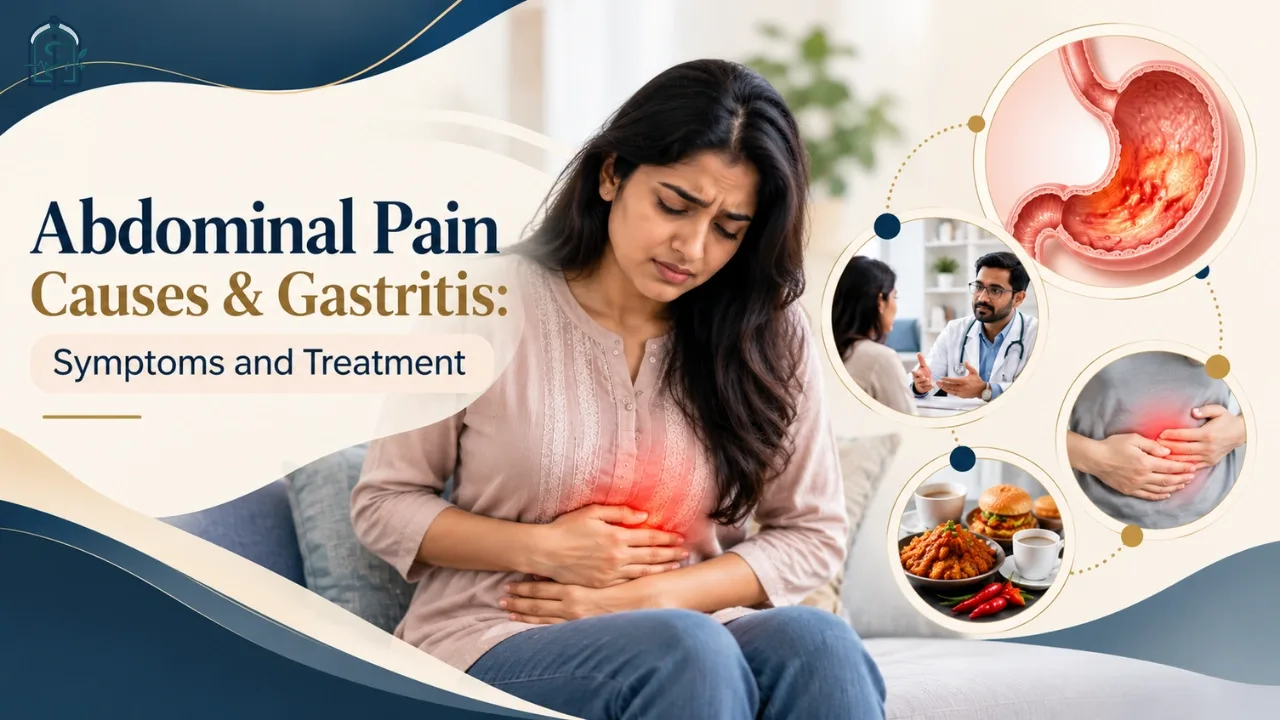 Abdominal Pain Causes & Gastritis: Symptoms and Treatment
 Gastritis Symptoms: What Does Gastritis Pain Feel Like and Where Does It Hurt?
 Gastritis vs Acid Reflux: What Is the Difference Between the Symptoms?
 How Is Gastritis Treated? Causes, Tests and Lifestyle Measures That May Help
 When Is Abdominal Pain Serious? Warning Signs You Should Not Ignore