Gastritis Symptoms: What Does Gastritis Pain Feel Like and Where Does It Hurt?
Gastritis can cause burning or aching pain in the upper abdomen, but symptoms vary from person to person.
 Written and reviewed by Dr. James Kumar Pallivathukkal, Specialist in Internal Medicine and DiabetesPublished 22 Oct 2026 · Reviewed by Dr. James Kumar Pallivathukkal on 22 October 2026 · 4 min readWhatsApp
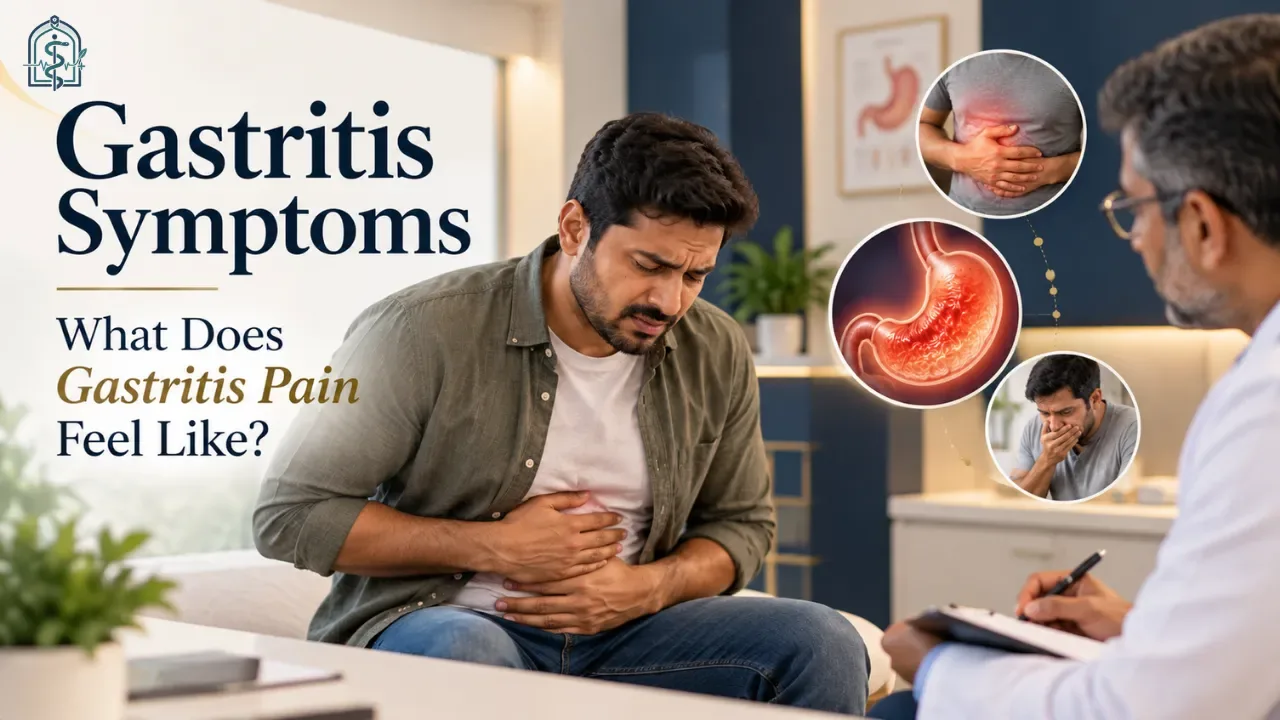
Gastritis often causes burning or aching pain in the upper abdomen, with nausea, bloating, early fullness or indigestion. Causes include H. pylori infection, painkillers (NSAIDs), alcohol and stress on the stomach lining. Not every stomach ache is gastritis, so persistent or severe symptoms need medical review.
In this guide
- 1What Does Gastritis Pain Feel Like?
- 2Where Does Gastritis Usually Hurt?
- 3Can Gastritis Pain Move?
- 4Common Symptoms of Gastritis
- 5What Causes Gastritis?
- 6Gastritis and Painkillers
- 7How Is Gastritis Diagnosed?
- 8When Is Stomach Pain a Warning Sign?
- 9Don't Assume Every Stomach Ache Is Gastritis
- 10Final Thoughts
What Does Gastritis Pain Feel Like?
For the wider picture, see our guide on Abdominal Pain Causes & Gastritis: Symptoms and Treatment.
Gastritis is inflammation of the stomach lining. It can cause discomfort in the upper abdomen, although some people with gastritis have few or no noticeable symptoms.
When symptoms occur, gastritis pain is often described as a burning, aching, gnawing, or uncomfortable sensation in the upper part of the abdomen.
The exact symptoms can vary depending on the underlying cause and whether another digestive condition is present.
Where Does Gastritis Usually Hurt?
Gastritis pain most commonly occurs in the upper middle or upper-left area of the abdomen, beneath the breastbone and ribs.
Some people may describe the discomfort simply as "stomach pain" or indigestion rather than being able to identify a precise location.
Pain location alone cannot confirm gastritis because several other conditions can cause similar symptoms.
Can Gastritis Pain Move?
The discomfort may sometimes feel more widespread or may be perceived in nearby areas. However, severe pain that spreads to the chest, back, or other areas should not automatically be assumed to be gastritis.
Depending on the symptoms, your doctor may need to consider other digestive or non-digestive causes.
Common Symptoms of Gastritis
Gastritis can cause symptoms such as:
-
Upper abdominal pain or discomfort
-
Burning or aching stomach pain
-
Nausea
-
Vomiting
-
Feeling full quickly
-
Bloating
-
Loss of appetite
-
Indigestion
Some people may develop gastritis without obvious symptoms, particularly when it is discovered during an evaluation for another reason.
What Causes Gastritis?
Gastritis can have several causes.
One important cause is Helicobacter pylori (H. pylori) infection, a bacterial infection that can affect the stomach lining.
Certain pain-relieving medicines, particularly nonsteroidal anti-inflammatory drugs (NSAIDs) such as ibuprofen and naproxen, can also irritate the stomach lining in some people.
Other factors may contribute to gastritis depending on the individual, including alcohol use and certain illnesses or physical stresses on the body.
Identifying the cause matters because treatment depends on what is responsible for the inflammation.
Gastritis and Painkillers
Regular use of certain painkillers can increase the risk of stomach irritation and related problems.
If you regularly take pain medication and develop persistent stomach pain, nausea, or other digestive symptoms, discuss this with your doctor. Do not stop an essential prescribed medicine without medical advice.
How Is Gastritis Diagnosed?
Your doctor may ask about your symptoms, medications, medical history, and other possible risk factors.
Depending on the situation, testing for H. pylori may be recommended.
Some patients may require an upper gastrointestinal endoscopy, which uses a flexible camera to examine the upper digestive tract. Whether this is necessary depends on symptoms, age, medical history, and clinical assessment.
When Is Stomach Pain a Warning Sign?
Not every episode of stomach discomfort requires urgent care. However, certain symptoms should never be ignored.
Seek urgent medical attention if you vomit blood, pass black or bloody stools, experience severe or rapidly worsening abdominal pain, faint, become unusually weak, or develop significant dizziness.
Persistent vomiting, unexplained weight loss, difficulty swallowing, or ongoing abdominal pain should also be discussed with a healthcare professional.
Don't Assume Every Stomach Ache Is Gastritis
Gastritis can cause upper abdominal discomfort, but similar symptoms may occur with ulcers, reflux, gallbladder problems, pancreatitis, infections, and other conditions.
If your symptoms continue or repeatedly return, getting the correct diagnosis is more useful than repeatedly treating the pain on your own.
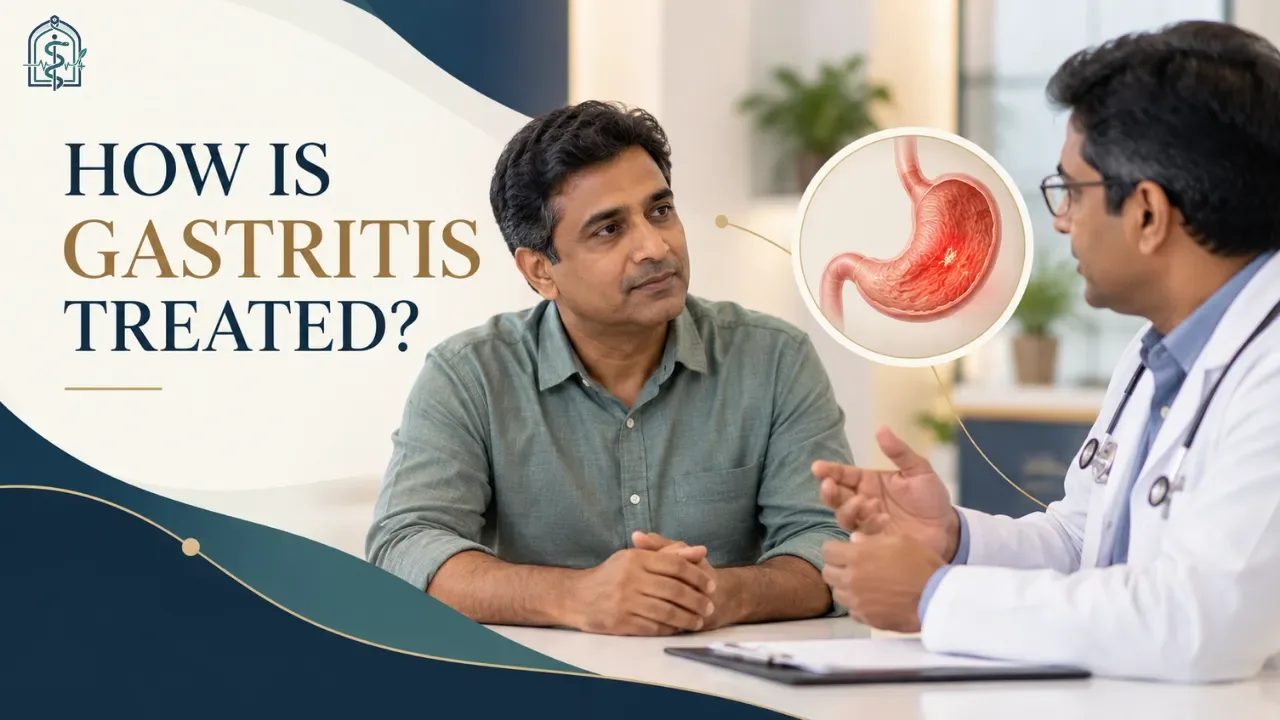
You may also find these guides helpful: Gastritis vs Acid Reflux: What Is the Difference Between the Symptoms?, How Is Gastritis Treated? Causes, Tests and Lifestyle Measures That May Help, What Causes Abdominal Pain? Common Causes by Location, Timing and Symptoms.
Final Thoughts
Gastritis can cause burning or aching discomfort in the upper abdomen, but the symptoms are not always specific. Where the pain occurs and how it feels can provide useful clues, but they cannot establish the diagnosis by themselves. If stomach pain is persistent, recurrent, or accompanied by warning signs such as bleeding, vomiting, weight loss, or severe pain, medical evaluation is important. Identifying the underlying cause allows treatment to be directed at the actual problem rather than simply masking the symptoms.
This article is for general information and does not replace personal medical advice.
Kidney, liver and gut in Muscat: when to see an internist
Dr. James sees adults with digestive problems at Badr Al Samaa Royal Hospital, Al Ghubrah, by appointment.

Key takeaways
- Gastritis is inflammation of the stomach lining.
- Gastritis pain commonly occurs in the upper middle or upper-left abdomen.
- Pain may feel burning, aching, gnawing, or uncomfortable.
- Nausea, vomiting, bloating, indigestion, and early fullness can also occur.
- H. pylori infection and certain pain-relieving medicines are important possible causes.
- Similar symptoms can occur with ulcers, reflux, gallbladder problems, and other conditions.
- Vomiting blood, black stools, fainting, severe weakness, or severe worsening pain requires urgent medical attention.
Common questions
What does gastritis pain feel like?
Gastritis pain may feel like burning, aching, gnawing, or general discomfort in the upper abdomen. Some people experience indigestion, nausea, bloating, or early fullness instead of obvious pain.
Where does gastritis usually hurt?
Gastritis commonly causes discomfort in the upper middle or upper-left part of the abdomen, beneath the breastbone and ribs. However, pain location varies and cannot confirm gastritis by itself.
Can gastritis cause severe pain?
Gastritis can cause significant discomfort, but severe or rapidly worsening abdominal pain should not automatically be attributed to gastritis. Other urgent conditions may cause similar symptoms and require medical evaluation.
Can gastritis be caused by stress?
Stress alone is not the usual cause, but it may worsen symptoms in some people. Common causes include H. pylori infection and NSAID use.
Can gastritis go away on its own?
Mild gastritis may settle once the cause, such as a painkiller or alcohol, is removed. Persistent symptoms need medical review, as some causes need treatment.
Sources
- NIDDK: Gastritis · niddk.nih.gov
- NHS: Stomach ache and abdominal pain · nhs.uk
- NHS: Indigestion · nhs.uk
This guide is for general information and does not replace a consultation. Editorial and medical review policy

More in this guide series
 Abdominal Pain Causes & Gastritis: Symptoms and Treatment
 What Causes Abdominal Pain? Common Causes by Location, Timing and Symptoms
 Gastritis vs Acid Reflux: What Is the Difference Between the Symptoms?
 How Is Gastritis Treated? Causes, Tests and Lifestyle Measures That May Help
 When Is Abdominal Pain Serious? Warning Signs You Should Not Ignore