Why High Blood Pressure Has No Symptoms: The Silent Killer
Ask most people with high blood pressure how they feel and you will hear some version of "fine." That answer is the core of the problem.
 Written and reviewed by Dr. James Kumar Pallivathukkal, Specialist in Internal Medicine and DiabetesPublished 3 Oct 2026 · Reviewed by Dr. James Kumar Pallivathukkal on 3 October 2026 · 4 min readWhatsApp
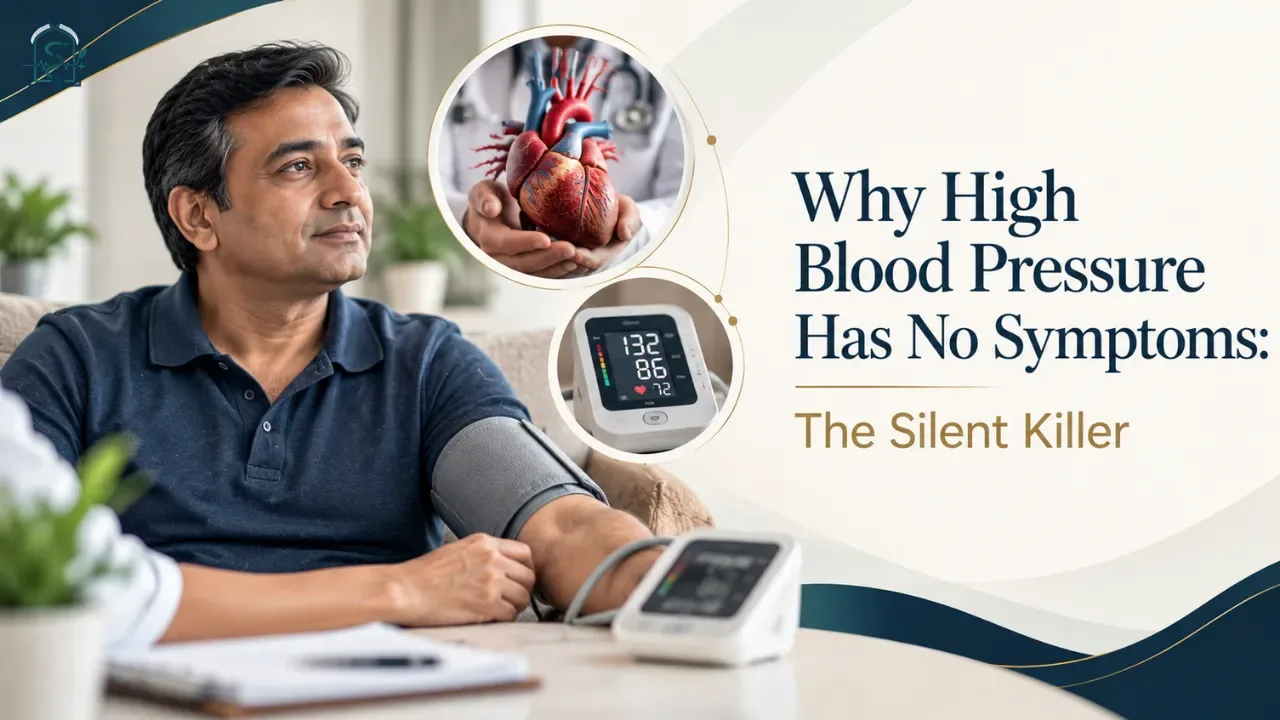
High blood pressure rarely produces symptoms you can feel. Headaches, dizziness and tiredness are too common to point to it reliably. The only way to know is to measure, and to measure again when a reading comes back high.
In this guide
Ask most people with high blood pressure how they feel and you will hear some version of "fine." That answer is the core of the problem. High blood pressure is usually silent, and it does its damage quietly in the heart, brain, kidneys and eyes for years before anyone connects it to a symptom. That is where the name "silent killer" comes from.
For the wider picture, see our guide on high blood pressure causes, risks and management.
Why Does High Blood Pressure Feel Like Nothing?
Blood pressure rarely jumps overnight. It creeps up over months and years, and the body makes room for it. Arteries thicken and stiffen, the heart adjusts to pushing against more resistance, and the new level gradually becomes the normal you live with every day. The body has no built-in alarm for this. A person can climb stairs, work a full shift and sleep well with readings that would concern a cardiologist.
Why Is It Called the Silent Killer?
Sustained pressure wears on the inner lining of blood vessels, and that wear accumulates. Over time it can contribute to:
-
Heart attack and heart failure
-
Stroke
-
Kidney damage, which can progress to kidney failure in some people
-
Damage to the tiny vessels at the back of the eye
Many patients first learn they have hypertension after one of these events. The nickname is meant as a prompt to get measured, not as a forecast. Most people with raised pressure do not suffer a catastrophe, and treatment meaningfully reduces the risk when it is started early and maintained.
Which Symptoms Mean You Need Urgent Help?
Severe elevations can produce symptoms, and a few of them are emergencies. Call emergency services or go to the nearest emergency department if high blood pressure comes with:
-
A sudden, severe headache
-
Chest pain or pressure
-
Breathlessness
-
Sudden weakness or numbness, often on one side of the body
-
Slurred speech or a drooping face
-
Confusion or new changes in vision
A reading above 180/120 mmHg with any of these needs urgent assessment. Do not attribute these symptoms to blood pressure without a proper evaluation, since several serious conditions look similar at first.
How Do You Find Out If You Have It?
Most healthy adults should have their pressure checked at least every few years. If you have diabetes, kidney disease, excess weight or a family history, ask for checks more often. A single reading rarely settles the question. Doctors generally want repeated readings on separate days before diagnosing hypertension.
If you use a home monitor, choose a validated upper-arm device rather than a wrist or finger model. Sit quietly for five minutes first, with your back supported and feet flat on the floor. Rest your arm on a table at heart level and take two readings about a minute apart. Keep a written log and bring it to your appointment. A log often changes the conversation, because it shows whether the high numbers appear only in the clinic or throughout the day.
What Should You Do If a Reading Is High?
One high reading is a reason to repeat the measurement, not a reason to worry yourself into a state. If elevated readings keep coming back, arrange a review. Practical changes make a real difference for many people. These include eating less salt, especially the hidden salt in bread, sauces, instant meals and restaurant food, walking or exercising on most days, losing weight gradually if needed, cutting back on alcohol and stopping smoking.
If your doctor prescribes medicine, keep taking it as directed. Many people stop once their numbers improve, and the pressure can climb back up. Any change to a dose belongs with your doctor.
When Should You See a Doctor?
If you have not had a recent blood pressure measurement, ask a healthcare professional when to check it. Repeated elevated readings should be assessed. Very high readings or symptoms such as chest pain, severe breathlessness or new neurological symptoms need urgent medical assessment rather than a routine booking.
You may also find these guides helpful: Primary Care Doctor or Cardiologist for Blood Pressure?, Why Is My Blood Pressure Different at Home Than at the Doctor's Office?, How to Lower Blood Pressure Naturally: A Step-by-Step Guide.
Final Thoughts
A blood pressure check takes a few minutes and costs very little, yet it is the only reliable way to catch hypertension during its silent years. Keep a record of readings and discuss the pattern with a qualified healthcare professional.
Heart and blood pressure in Muscat: when to see an internist
Dr. James sees adults with high blood pressure at Badr Al Samaa Royal Hospital, Al Ghubrah, by appointment.

Questions to ask at your visit
- What do my readings look like at home and in the clinic?
- Have my kidneys, blood sugar and cholesterol been checked?
- Which change would help me most?
- How often should I recheck, and which numbers should prompt a call?
Key takeaways
- High blood pressure usually causes no symptoms.
- Damage builds quietly in the heart, brain, kidneys and eyes.
- Only a measurement reveals it.
- Severe headache, chest pain, weakness or speech changes need emergency care.
- Early checks make the biggest difference.
Common questions
Can high blood pressure cause headaches?
It is a common belief, but headaches are a weak signal. Most headaches have other causes, and many people with very high readings never get a headache at all. The exception is a severe headache that arrives with chest pain, confusion, vision changes or weakness. That combination needs urgent assessment, because it can signal a hypertensive emergency.
Can you feel high blood pressure?
Usually you cannot. Most people with hypertension feel normal. Those who notice something tend to describe tiredness or dizziness, which are too vague to point to blood pressure. Measurement is the only dependable way to know where you stand.
How often should adults check their blood pressure?
For healthy adults, checks every few years are a common starting point. People with diabetes, kidney disease, excess weight or a family history may need more frequent monitoring. Your doctor can adjust that schedule based on your readings and overall risk.
Is high blood pressure serious if I feel fine?
Yes, it is worth taking seriously even without symptoms. The concern is long-term strain on the heart, brain, kidneys and eyes. How much it matters depends on how high your readings run, how long they have stayed high and what else you carry, such as diabetes or smoking.
Can lifestyle changes alone control blood pressure?
For some people with mildly raised readings, lifestyle changes bring the numbers into a healthier range. Others need medicine, particularly when readings are high or other risks are present. Your doctor can judge which path suits you, and any medicine decision should be made together with them.
Sources
- NHS: High blood pressure (hypertension) · nhs.uk
- CDC: About high blood pressure · cdc.gov
This guide is for general information and does not replace a consultation. Editorial and medical review policy

Related areas of expertise
More in this guide series
 Understanding High Blood Pressure: Causes, Risks & Management
 Smartwatch vs. Cuff: Can Wearables Measure Blood Pressure Accurately?
 How to Lower Blood Pressure Naturally: A Step-by-Step Guide
 Why Is My Blood Pressure Different at Home Than at the Doctor's Office?
 Primary Care Doctor or Cardiologist for Blood Pressure?
Keep reading
Monitoring and a plan to reach target
Book about thisRead about high blood pressure