Understanding High Blood Pressure: Causes, Risks & Management
You can have high blood pressure and feel perfectly well. That is one of the reasons hypertension is so often discovered during an unrelated appointment,
 Written and reviewed by Dr. James Kumar Pallivathukkal, Specialist in Internal Medicine and DiabetesPublished 3 Oct 2026 · Reviewed by Dr. James Kumar Pallivathukkal on 3 October 2026 · 17 min readWhatsApp
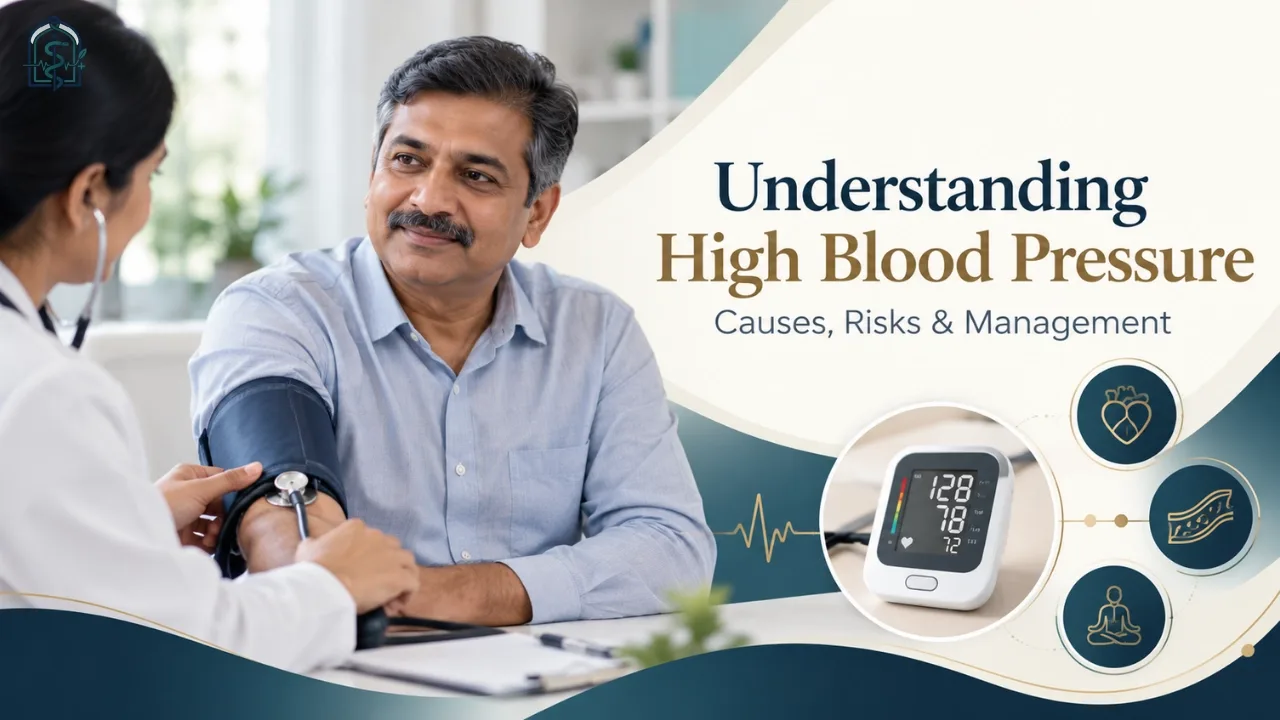
High blood pressure, or hypertension, means that the pressure of blood against the artery walls remains higher than recommended over time. Most people do not have noticeable symptoms, so regular blood pressure measurement is important.
In this guide
- 1What exactly is high blood pressure?
- 2Why can high blood pressure be present without symptoms?
- 3What causes high blood pressure?
- 4What are the symptoms of high blood pressure?
- 5How is hypertension diagnosed?
- 6Why is my blood pressure higher at the doctor's office?
- 7How should you measure blood pressure at home?
- 8What do the two blood pressure numbers mean?
- 9Who is more likely to develop hypertension?
- 10What happens if high blood pressure is left untreated?
- 11Can you lower blood pressure without medication?
- 12When are blood pressure medicines needed?
- 13Why is my blood pressure still high even though I take medicine?
- 14What is the connection between high blood pressure and diabetes?
- 15What tests might you need if you have hypertension?
- 16When should you see a doctor about high blood pressure?
- 17Common myths about high blood pressure
- 18How can you keep a useful blood pressure record?
- 19Final Thoughts
- 20Which guides go deeper on this topic?
Risk can be influenced by age, genetics, excess weight, physical inactivity, high sodium intake, alcohol use, smoking, diabetes, kidney disease and certain medicines or medical conditions. Treatment depends on the individual. It may involve changes to diet and physical activity, weight management, reducing alcohol, stopping smoking, monitoring blood pressure at home and, when appropriate, prescription medication.
You can have high blood pressure and feel perfectly well.
That is one of the reasons hypertension is so often discovered during an unrelated appointment, a routine health check, a pharmacy measurement, or a blood pressure reading taken at home. There may be no headache, dizziness or other obvious warning that anything is wrong.
High blood pressure does not usually develop because of one single thing. Age, family history, body weight, physical activity, diet, alcohol, smoking and other medical conditions can all play a part. Kidney disease and diabetes are particularly important because they can both contribute to hypertension and be affected by it.
The first step is knowing whether the blood pressure is genuinely and consistently high. A single unusual reading is not always enough to diagnose hypertension. The way the blood pressure was measured, the circumstances at the time and readings taken on other days can all matter.
Once hypertension has been confirmed, the focus shifts to reducing the long-term strain on the heart and blood vessels and protecting organs such as the kidneys and brain.
What exactly is high blood pressure?
Blood pressure is not a fixed number. It changes throughout the day.
It tends to rise when you are physically active and can change with stress, pain, illness, caffeine and other circumstances. It also falls during periods of rest.
A blood pressure reading contains two numbers.
The systolic number is the pressure in the arteries when the heart contracts and pumps blood.
The diastolic number is the pressure between heartbeats, when the heart is relaxing.
So, if a reading is 130/80 mmHg, 130 is the systolic pressure and 80 is the diastolic pressure.
The important issue is not simply whether one reading happens to be above a particular number. Doctors look at the overall pattern and use established clinical guidelines when deciding whether someone has hypertension.
Different guidelines use somewhat different thresholds. The World Health Organization defines hypertension as blood pressure of 140/90 mmHg or higher when measured on two different days. Other professional organisations use lower thresholds for classifying elevated blood pressure or hypertension.
That is why it is better to discuss a series of readings with a healthcare professional than to diagnose yourself from one number.
Why can high blood pressure be present without symptoms?
There is a common assumption that high blood pressure should make you feel different.
Usually, it does not.
Most people with hypertension have no specific symptoms. The body can adapt to gradually increasing pressure, allowing someone to continue with normal daily activities without realising that their blood pressure is elevated.
This is also why a person should not assume that normal-feeling days mean their blood pressure is normal.
Headaches, dizziness, tiredness and similar complaints can occur for many reasons. They are not reliable ways of identifying ordinary hypertension.
Very severe blood pressure elevation is different. When blood pressure becomes dangerously high, particularly when there are symptoms suggesting damage to an organ, urgent medical assessment may be necessary.
What causes high blood pressure?
For many people, there is no single cause that can be pointed to.
This type of hypertension is generally called primary or essential hypertension. It develops through a mixture of genetic, biological, lifestyle and environmental influences.
Some of the factors associated with higher blood pressure are within our control. Others are not.
Family history
If hypertension runs in your family, your own risk may be higher.
Genes can influence several processes involved in blood pressure regulation, including how the kidneys handle sodium and how blood vessels respond to signals from the body.
A family history does not mean that you will definitely develop hypertension. It simply means that regular monitoring becomes more important.
Age
Blood pressure tends to change as people get older.
Changes in the arteries and other parts of the cardiovascular system can contribute to rising blood pressure over time.
That said, hypertension is not exclusively a condition of older adults. Younger people can develop it too, particularly when other risk factors or underlying medical conditions are present.
Excess weight
Being overweight or living with obesity can increase the likelihood of high blood pressure.
The relationship is more complicated than simply saying that body weight causes hypertension. Changes in hormones, kidney function, blood vessel health and metabolism can all be involved.
Too much sodium
Some people are particularly sensitive to sodium.
A diet containing a large amount of salt can contribute to higher blood pressure, especially when much of that sodium comes from processed foods, packaged snacks, restaurant meals, sauces and other prepared foods.
Reducing salt is therefore not only about putting less salt on your food. It also means paying attention to where sodium is coming from in the overall diet.
Physical inactivity
Regular movement is good for cardiovascular health.
People who are physically inactive have a higher risk of hypertension and other cardiovascular conditions. Exercise can also support weight management, improve fitness and contribute to better overall metabolic health.
Alcohol
Regularly drinking excessive amounts of alcohol can raise blood pressure.
For someone with hypertension, discussing alcohol intake with a healthcare professional can be worthwhile, particularly when blood pressure remains high despite other changes.
Smoking
Smoking damages blood vessels and increases cardiovascular risk.
Stopping smoking is important even if the person's blood pressure itself does not immediately return to normal. Blood pressure is only one part of the overall cardiovascular picture.
Diabetes
Diabetes and hypertension frequently occur together.
High blood glucose can contribute to damage affecting blood vessels and the kidneys, while hypertension can increase the risk of cardiovascular and kidney complications in people with diabetes.
For someone living with both conditions, managing blood pressure is an important part of reducing long-term health risks.
Kidney disease
The kidneys play a major role in regulating fluid and sodium balance, so kidney problems can affect blood pressure.
The relationship works in both directions. Kidney disease can contribute to hypertension, while prolonged hypertension can damage the kidneys.
Other conditions and medicines
Certain kidney, hormonal and vascular conditions can cause what is known as secondary hypertension.
Some medicines and other substances can also raise blood pressure.
If hypertension appears unusually early, becomes difficult to control or develops suddenly, a doctor may look for an underlying cause rather than assuming that ordinary primary hypertension is responsible.
What are the symptoms of high blood pressure?
For most people, there aren't any.
That answer can feel unsatisfying, but it is one of the most important things to understand about hypertension.
A person may have consistently elevated blood pressure while eating, working, exercising and sleeping normally.
When symptoms do occur, they are not specific enough to diagnose hypertension on their own. Headaches, dizziness and fatigue, for example, have a long list of possible causes.
Severely elevated blood pressure can be associated with more concerning symptoms, including:
-
Severe headache
-
Chest pain
-
Shortness of breath
-
Changes in vision
-
Confusion
-
Nausea or vomiting
-
Weakness or numbness
-
Difficulty speaking
These symptoms should not simply be blamed on "high BP." They need proper medical assessment.
How is hypertension diagnosed?
A blood pressure diagnosis is usually based on more than one measurement.
That matters because blood pressure is affected by circumstances.
Imagine checking your blood pressure immediately after climbing several flights of stairs, drinking coffee, rushing to an appointment or having an argument. The result may not represent your usual resting blood pressure.
For this reason, a clinician may repeat the measurement after you have rested or ask you to monitor your blood pressure outside the clinic.
Depending on the situation, this may involve:
-
Repeat clinic measurements
-
Home blood pressure monitoring
-
Ambulatory blood pressure monitoring over a longer period
-
Assessment of other cardiovascular risk factors
-
Blood and urine tests
-
Additional investigations when an underlying cause is suspected
The aim is not simply to obtain a number. It is to understand what your blood pressure is doing in everyday life and whether there are other health issues that need attention.
Why is my blood pressure higher at the doctor's office?
This happens to some people.
White-coat hypertension refers to a pattern in which blood pressure is higher in a healthcare setting than it is outside the clinic.
Being in a medical environment can make some people tense, and that temporary stress response may affect the reading.
There is another pattern called masked hypertension. In this situation, a person's clinic reading may look acceptable while their blood pressure is higher at home or during normal daily activities.
Home or ambulatory monitoring can help identify these patterns.
This is one reason doctors sometimes ask patients to keep a blood pressure diary rather than making a treatment decision from a single office reading.
How should you measure blood pressure at home?
Home readings can be extremely useful, but the technique matters.
Before measuring:
-
Avoid exercise, smoking and caffeine for about 30 minutes when possible.
-
Empty your bladder.
-
Sit quietly for around five minutes.
-
Keep your back supported.
-
Place both feet flat on the floor.
-
Rest your arm on a table or other surface.
-
Keep the cuff around your bare upper arm.
-
Position the arm roughly at heart level.
-
Stay quiet while the monitor is running.
Take two readings about one minute apart and record them if your healthcare professional has asked you to monitor your blood pressure.
An appropriately sized upper-arm cuff is generally preferred over less reliable methods. The device itself also matters. If you regularly monitor your blood pressure, it can be useful to bring the monitor to a medical appointment so the technique and device can be checked.
What do the two blood pressure numbers mean?
The first number is the systolic pressure.
It reflects the pressure in your arteries when your heart contracts.
The second number is the diastolic pressure.
It reflects the pressure when your heart relaxes between beats.
For example:
120/80 mmHg
-
120 = systolic pressure
-
80 = diastolic pressure
You may see different blood pressure categories depending on which guideline you are reading.
The American Heart Association classifies a reading below 120/80 mmHg as normal and uses 130/80 mmHg as the threshold for its hypertension category. The World Health Organization uses 140/90 mmHg or higher on measurements taken on different days as its definition of hypertension.
These differences are one reason online blood pressure charts should not be used in isolation to decide whether you need treatment.
Who is more likely to develop hypertension?
Some people have a greater risk because of factors they cannot change. Others can reduce their risk by addressing modifiable factors.
Risk can be higher with:
-
A family history of hypertension
-
Increasing age
-
Overweight or obesity
-
Physical inactivity
-
A high-sodium diet
-
Excessive alcohol consumption
-
Smoking
-
Diabetes
-
Kidney disease
-
Certain hormonal conditions
-
Certain medicines
-
Other cardiovascular risk factors
You do not need to have all of these factors to develop high blood pressure.
Conversely, having none of them does not guarantee that your blood pressure will remain normal.
What happens if high blood pressure is left untreated?
The concern with hypertension is not usually how you feel today.
It is what persistent high pressure can do over years.
Blood vessels throughout the body are exposed to that increased pressure. Over time, this can contribute to damage involving several organs.
Heart
The heart has to work against greater resistance when blood pressure is persistently elevated.
Hypertension can contribute to cardiovascular disease, including coronary artery disease and heart failure.
Brain
High blood pressure is an important risk factor for stroke.
Damage to blood vessels supplying the brain can occur gradually, and controlling blood pressure is an important part of reducing stroke risk.
Kidneys
The kidneys contain an extensive network of small blood vessels.
Long-term hypertension can damage this vascular network and contribute to declining kidney function.
This is particularly important when hypertension occurs alongside diabetes.
Eyes
Small blood vessels supplying the eyes can also be affected by prolonged hypertension.
Significant or longstanding blood pressure problems can therefore contribute to problems with vision and the structures of the eye.
Blood vessels
Persistent hypertension can contribute to changes in the walls of arteries and increase overall cardiovascular risk.
The risk becomes more significant when high blood pressure occurs alongside other factors such as smoking, high cholesterol, diabetes or obesity.
Can you lower blood pressure without medication?
Sometimes lifestyle changes make a substantial difference.
Whether they are enough on their own depends on how high the blood pressure is and the person's overall health and cardiovascular risk.
Cut back on excess salt
Look beyond the salt shaker.
Packaged foods, instant meals, sauces, restaurant food, processed meats and savoury snacks can all contribute significant amounts of sodium.
Reading food labels can help identify foods that are particularly high in sodium.
Eat for cardiovascular health
A balanced eating pattern can include:
-
Vegetables
-
Fruits
-
Whole grains
-
Beans and pulses
-
Nuts and seeds where appropriate
-
Fish and other nutritious protein sources
-
Less highly processed food
-
Lower amounts of saturated and trans fats
The goal is not to follow a perfect diet. Consistency matters more than a few "healthy" meals followed by a return to old habits.
Keep moving
Regular physical activity can help with blood pressure and cardiovascular fitness.
Walking, cycling, swimming, strength training and other forms of activity can all have a place in a healthy routine. The appropriate intensity depends on your health, fitness level and any medical conditions you may have.
Work towards a healthy weight
For people carrying excess weight, even gradual weight loss may help improve several cardiovascular risk factors.
The approach should be realistic and sustainable rather than based on extreme diets.
Stop smoking
Smoking and hypertension are a particularly concerning combination because both contribute to cardiovascular and blood vessel damage.
If you smoke, stopping can reduce cardiovascular risk even if your blood pressure still needs separate treatment.
Review alcohol intake
Regularly drinking large amounts of alcohol can make blood pressure harder to control.
Reducing alcohol may therefore be part of a broader hypertension management plan.
Pay attention to sleep
Poor sleep can affect general health and may make blood pressure harder to manage.
Sleep apnea is particularly relevant because it is associated with hypertension. People who snore heavily, stop breathing during sleep, wake repeatedly or remain excessively sleepy during the day may benefit from discussing these symptoms with a doctor.
When are blood pressure medicines needed?
Not everyone with high blood pressure needs the same treatment.
Some people may initially focus on lifestyle changes and monitoring. Others need medication because their blood pressure is substantially elevated, because lifestyle changes have not brought it into the desired range, or because they have additional cardiovascular risk factors or medical conditions.
Common classes of blood pressure medicine include:
-
ACE inhibitors
-
Angiotensin receptor blockers (ARBs)
-
Calcium channel blockers
-
Diuretics
-
Other medicines in selected circumstances
These medicines work in different ways.
For example, some reduce the effects of hormones that raise blood pressure, some relax blood vessels, and others help the body remove excess sodium and fluid.
The choice of medicine depends on the person's medical history and other factors such as kidney function, diabetes, age, pregnancy status where relevant, other medicines and previous response to treatment.
There is no universally correct blood pressure tablet for everyone.
And if you have been prescribed medication, do not stop taking it simply because a few readings have improved. Better readings may be evidence that the treatment is doing its job.
Why is my blood pressure still high even though I take medicine?
Persistent hypertension does not necessarily mean that treatment has failed.
There can be several reasons.
Perhaps the blood pressure is not being measured consistently. Perhaps doses are occasionally missed. Some medicines or substances can raise blood pressure. Dietary sodium, alcohol, sleep apnea, kidney disease and hormonal conditions may also contribute.
Sometimes the treatment plan simply needs to be reviewed.
If blood pressure remains above the desired range despite appropriate treatment with several medicines, your doctor may investigate resistant hypertension and look for factors that could be keeping the blood pressure elevated.
Do not increase or decrease your medication yourself. A medication review is safer and more useful than adjusting doses based on individual home readings.
What is the connection between high blood pressure and diabetes?
The two conditions frequently appear together.
Diabetes can damage blood vessels and the kidneys, while high blood pressure can increase the strain placed on those same organs. When both conditions are present, the combined cardiovascular and kidney risks can become more important.
That is why managing blood pressure in a person with diabetes usually involves looking at more than blood pressure alone.
Blood glucose, HbA1c, cholesterol, kidney function, body weight, physical activity and other cardiovascular risk factors may all form part of the wider assessment.
What tests might you need if you have hypertension?
There is no single set of tests that is appropriate for every person.
Depending on your age, medical history, blood pressure pattern and other risk factors, your doctor may recommend:
-
Repeat blood pressure measurements
-
Home or ambulatory monitoring
-
Blood glucose or HbA1c
-
Cholesterol testing
-
Kidney function tests
-
Electrolytes
-
Urine testing
-
Assessment of cardiovascular risk
-
Additional investigations if a secondary cause is suspected
These tests help answer a broader question:
Is the high blood pressure occurring on its own, or is there another health problem that needs to be addressed as well?
When should you see a doctor about high blood pressure?
Repeatedly elevated readings are worth discussing with a healthcare professional, even when you feel completely normal.
An assessment becomes particularly important if you have:
-
Diabetes
-
Kidney disease
-
Known heart disease
-
Previous stroke
-
Obesity
-
High cholesterol
-
A strong family history of cardiovascular disease
-
Blood pressure that remains high despite medication
You should also speak to a doctor if your readings at home are consistently different from those recorded in a clinic.
What if the blood pressure is extremely high?
A reading above 180/120 mmHg is markedly elevated.
If you obtain such a reading, sit quietly and repeat it after a short period.
If it remains that high, contact a healthcare professional promptly.
If very high blood pressure occurs together with chest pain, severe shortness of breath, weakness or numbness, difficulty speaking, confusion or changes in vision, seek emergency medical care rather than waiting for a routine appointment.
The symptoms matter as much as the number in this situation.
Common myths about high blood pressure
"If I don't have symptoms, my blood pressure must be fine."
Not necessarily.
Hypertension is often completely silent. Feeling normal is not evidence that your blood pressure is normal.
"One high reading means I have hypertension."
Not automatically.
Blood pressure changes naturally and can be affected by recent activity, stress, caffeine, pain and measurement technique. Persistent elevation is what matters when diagnosing hypertension.
"Once my blood pressure is normal, I can stop my medicine."
A normal reading may mean the treatment is working.
Stopping medication without medical advice can cause blood pressure to rise again. Any change in treatment should be discussed with the prescribing clinician.
"High blood pressure only affects the heart."
It affects more than the heart.
The brain, kidneys, blood vessels and eyes can also be affected by long-standing hypertension.
"Only older people develop high blood pressure."
Age increases risk, but hypertension can occur in younger adults too.
When it appears at a young age or becomes unusually difficult to control, doctors may sometimes investigate for secondary causes.
How can you keep a useful blood pressure record?
If you have been asked to monitor your blood pressure at home, consistency is more useful than taking occasional readings whenever you remember.
A simple record can include:
Date | Time | Blood pressure | Pulse | Notes
You might also record anything relevant that could help explain an unusual reading, such as illness, poor sleep, significant stress or recent exercise.
Take the record to your medical appointment.
A series of readings gives your doctor much more information than saying, "My blood pressure was high last week."
Because heart and circulation symptoms can overlap, our guide on heart disease warning signs is also worth reading.
Final Thoughts
Which guides go deeper on this topic?
-
Smartwatch vs. Cuff: Can Wearables Measure Blood Pressure Accurately?
-
Why Is My Blood Pressure Different at Home Than at the Doctor's Office?
High blood pressure is an unusual condition in one important respect: you can have it for years without feeling ill.
That makes routine checking surprisingly important.
If a reading comes back high, there is no need to panic over a single number. At the same time, repeatedly elevated readings should not be dismissed simply because you feel well.
The next step is to establish what your blood pressure is doing consistently, look for factors that may be contributing to it, and assess whether there are other health issues that need attention.
For someone with diabetes, kidney disease, obesity or several chronic conditions, blood pressure management is best considered as part of the wider picture of cardiovascular and metabolic health.
Patients in Muscat and across Oman who have persistent high readings can discuss their blood pressure with an Internal Medicine physician and determine whether monitoring, lifestyle changes, medication or further investigation is appropriate.
Heart and blood pressure in Muscat: when to see an internist
Dr. James sees adults with high blood pressure at Badr Al Samaa Royal Hospital, Al Ghubrah, by appointment.

Key takeaways
- High blood pressure often causes no symptoms.
- Regular measurement is the most reliable way to detect hypertension.
- One abnormal reading does not necessarily establish a diagnosis.
- Proper technique makes home monitoring more useful.
- Age, genetics, excess weight, inactivity, sodium intake, alcohol, smoking, diabetes and kidney disease can all influence blood pressure.
- Persistent hypertension can affect the heart, brain, kidneys, eyes and blood vessels.
- Lifestyle changes are an important part of treatment.
Common questions
Can you have high blood pressure without knowing it?
Yes. Most people with hypertension do not experience specific symptoms. Someone can therefore have persistently elevated blood pressure while feeling completely well. This is why routine blood pressure checks are important, especially when a person has risk factors such as diabetes, kidney disease, obesity or a family history of hypertension.
What are the most common causes of high blood pressure?
Hypertension usually develops from a combination of factors. Age, genetics, family history, excess body weight, physical inactivity, high sodium intake and excessive alcohol consumption can contribute. Diabetes, kidney disease, certain medicines and some hormonal or vascular conditions can also raise blood pressure.
Can high blood pressure be lowered naturally?
Lifestyle changes can improve blood pressure in many people. Reducing excess sodium, becoming more physically active, maintaining a healthy weight, eating a balanced diet, stopping smoking and limiting excessive alcohol can all help. However, lifestyle changes are not sufficient for everyone, and some people also need medication.
Why is my blood pressure normal at home but high at the doctor's office?
One possible explanation is white-coat hypertension, where blood pressure rises temporarily in a clinical setting. The opposite pattern, known as masked hypertension, can also occur. Home or ambulatory monitoring may help distinguish these patterns and give a clearer picture of a person's usual blood pressure.
Can high blood pressure damage the kidneys?
Yes. Persistent hypertension can damage the small blood vessels in the kidneys and contribute to declining kidney function. Kidney disease can also raise blood pressure, so the relationship works in both directions. This is one reason kidney function may be checked when hypertension is diagnosed.
What should I do if my blood pressure is over 180/120?
Sit quietly and repeat the measurement after a short period. If it remains above 180/120 mmHg, contact a healthcare professional promptly. If the high reading is accompanied by chest pain, severe breathlessness, weakness, numbness, difficulty speaking, confusion or vision changes, seek emergency medical care immediately.
Sources
- NHS: High blood pressure (hypertension) · nhs.uk
- CDC: About high blood pressure · cdc.gov
- WHO: Cardiovascular diseases fact sheet · who.int
This guide is for general information and does not replace a consultation. Editorial and medical review policy

Related areas of expertise


More in this guide series
 Why High Blood Pressure Has No Symptoms: The Silent Killer
 Smartwatch vs. Cuff: Can Wearables Measure Blood Pressure Accurately?
 How to Lower Blood Pressure Naturally: A Step-by-Step Guide
 Why Is My Blood Pressure Different at Home Than at the Doctor's Office?
 Primary Care Doctor or Cardiologist for Blood Pressure?
Keep reading
Monitoring and a plan to reach target
Book about thisRead about high blood pressure