Smartwatch vs. Cuff: Can Wearables Measure Blood Pressure Accurately?
Smartwatches can estimate blood pressure, but a validated upper-arm cuff is still the more dependable choice. Learn what wearables get right, where they fall short, and how to measure properly at home.
 Written and reviewed by Dr. James Kumar Pallivathukkal, Specialist in Internal Medicine and DiabetesPublished 4 Oct 2026 · Reviewed by Dr. James Kumar Pallivathukkal on 4 October 2026 · 4 min readWhatsApp
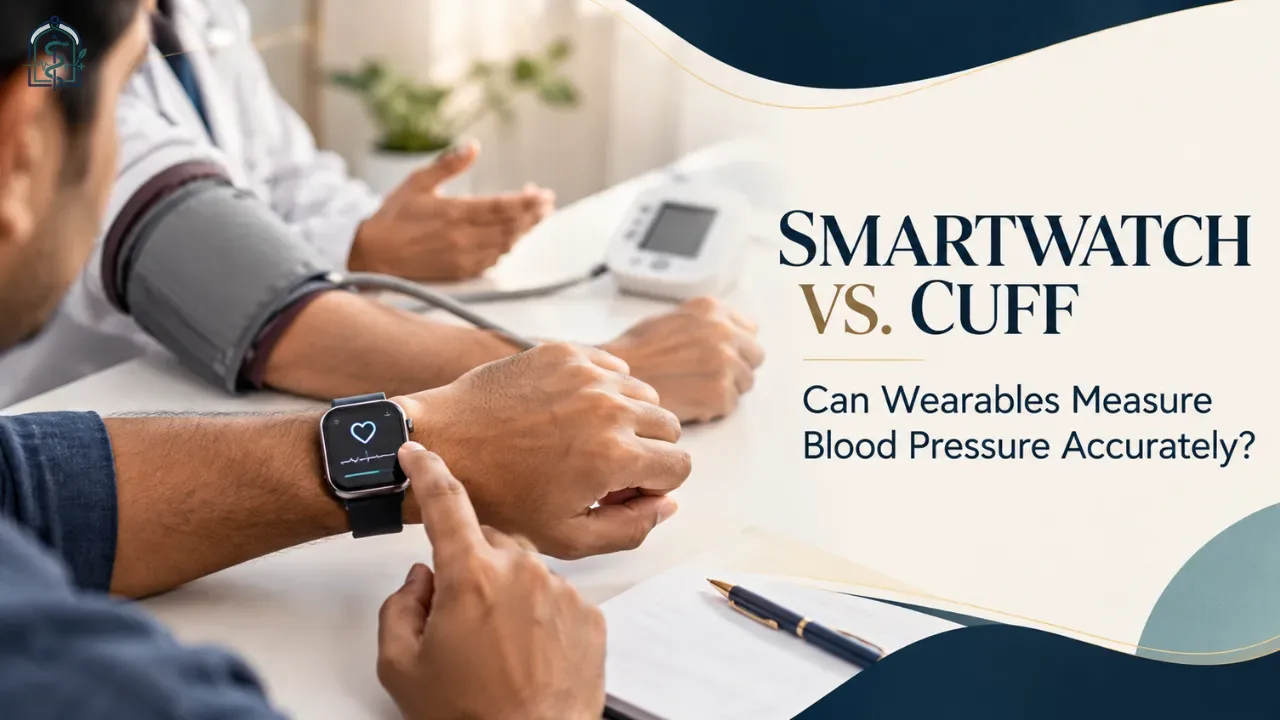
The upper-arm cuff is the accepted standard for measuring blood pressure at home and in clinic. Most wearables estimate it indirectly, and many need calibration against a cuff to be useful at all. A wearable is a reasonable early warning tool. It should prompt a proper measurement, not replace one.
In this guide
A smartwatch can display a blood pressure figure, and sometimes that figure lands close to the real value. The cuff is still the tool doctors rely on, though. Most wearables do not measure pressure the way a cuff does. They estimate it from the pulse signal at your wrist, so the number depends on the device, how snugly it sits, and what you were doing when you checked.
For the wider picture, see our guide on Understanding High Blood Pressure: Causes, Risks & Management.
How Does a Cuff Measure Blood Pressure?
The cuff inflates around your upper arm, briefly blocks the artery, and then lets the pressure out slowly. As blood begins to flow again, the device senses the change in the artery wall and converts it into two numbers. This approach has been used for decades and is well understood. It works best when the cuff fits your arm and the device has been checked for accuracy.
How Do Smartwatches Estimate Blood Pressure?
Most watches shine a small light into the skin of the wrist and track how blood volume changes with each heartbeat. Some add other signals, such as how quickly the pulse wave travels through the arteries. A software model then turns those signals into an estimate. Stiff arteries, wrist movement, a loose strap or cold skin can all push that estimate off course.
What Do Wearables Do Well?
Wearables are excellent at continuous, effortless tracking. They record heart rate and activity throughout the day, and some models flag irregular heart rhythms. A trend across several weeks can show whether your readings are gradually creeping up. That trend is worth bringing to your doctor, even if the individual numbers are not perfect.
Where Can Wearables Mislead?
A reassuring number on the screen can tempt people to skip a proper check. That is a real risk, because high blood pressure usually causes no symptoms, and feeling well tells you little about your pressure. The opposite problem is also common. A single high reading can cause alarm, yet pressure often rises after a brisk walk, a strong coffee or a stressful phone call. If the watch shows an unexpectedly high value, sit quietly for five minutes and measure again with a cuff before reading anything into it.
How Should You Measure Blood Pressure at Home?
Start with an upper-arm monitor from a brand that has been independently validated. Your doctor can recommend models they trust. Then follow a simple routine:
-
Avoid exercise, smoking and caffeine for about 30 minutes beforehand.
-
Empty your bladder and sit quietly for five minutes.
-
Support your back, keep both feet flat, and rest your bare arm at heart level.
-
Take two readings about a minute apart, and write them down with the time.
Bring the device to a clinic visit now and then. Doctors can check whether your technique and the monitor are giving sound results.
What Should You Do If You Use a Smartwatch?
Let the watch remind you to measure, but rely on the cuff for the number. Keep a simple log with the time, what you were doing and the result. When you see your doctor, share the overall pattern rather than only the highest reading.
Do not wait for a repeat reading if high blood pressure comes with chest pain, a severe headache, breathlessness, sudden weakness, trouble speaking or changes in vision. Seek emergency care straight away.
When Should You See a Doctor?
Arrange a review if cuff readings stay high, if your home and clinic numbers differ widely, or if your watch keeps showing high values for several weeks. People with diabetes or kidney disease usually need closer monitoring, so it is worth raising the issue sooner rather than later.
You may also find these guides helpful: Why Is My Blood Pressure Different at Home Than at the Doctor's Office? and Primary Care Doctor or Cardiologist for Blood Pressure?.
Final Thoughts
Wearables have helped many people start paying attention to their heart health, and that counts for something. The best results come from pairing the watch with careful cuff readings and an honest conversation with a clinician. For patients in Muscat who track their pressure at home, a written log often tells a clearer story at a consultation than a screenshot does.
Heart and blood pressure in Muscat: when to see an internist
Dr. James sees adults with high blood pressure at Badr Al Samaa Royal Hospital, Al Ghubrah, by appointment.

Key takeaways
- Smartwatch readings are estimates, and their accuracy varies from person to person.
- A validated upper-arm cuff remains the dependable method at home and in clinic.
- A high reading on a watch is a prompt to measure again properly.
- A normal reading on a watch does not rule out high blood pressure.
- A written log, shared with your doctor, is more useful than a single screen reading.
Common questions
Are smartwatch blood pressure readings accurate?
Some devices come closer than others, but most smartwatch readings are software-based estimates rather than direct measurements. Movement, skin temperature, how the watch fits and differences in individual blood vessels can all shift the result. For decisions about diagnosis or treatment, a validated upper-arm cuff gives more reliable information.
Can I use my smartwatch instead of a blood pressure cuff?
Not for diagnosis or medication decisions. A watch can help you spot trends or prompt a check. A carefully taken cuff reading from a validated device gives your doctor the information they need to act on.
Why does my watch show a higher reading than my cuff?
Several factors can explain the gap, including the watch's software, a loose fit, movement during measurement and the time of day. Sit quietly for five minutes, then measure with the cuff. If the two still disagree, take both devices to your doctor so they can compare them side by side.
What blood pressure reading should make me see a doctor?
Your doctor will interpret your readings against established guidelines, which differ slightly between organisations. Repeated home readings that stay high, or any high reading accompanied by worrying symptoms, deserve a medical review. One reading alone rarely settles the question.
How do I choose a reliable blood pressure monitor?
Look for an upper-arm model that has been independently validated and that suits your arm size. Validation programs publish lists of tested devices. Ask your doctor which model they recommend, and bring your monitor to a consultation so its readings can be checked against a clinic measurement.
Sources
- NHS: High blood pressure (hypertension) · nhs.uk
- CDC: About high blood pressure · cdc.gov
This guide is for general information and does not replace a consultation. Editorial and medical review policy

More in this guide series
 Understanding High Blood Pressure: Causes, Risks & Management
 Why High Blood Pressure Has No Symptoms: The Silent Killer
 How to Lower Blood Pressure Naturally: A Step-by-Step Guide
 Why Is My Blood Pressure Different at Home Than at the Doctor's Office?
 Primary Care Doctor or Cardiologist for Blood Pressure?
Keep reading
Monitoring and a plan to reach target
Book about thisRead about high blood pressure