When Should You See a Doctor for Shortness of Breath or Breathing Difficulty?
Shortness of breath can happen after exercise, but unexplained or persistent breathing difficulty may signal an underlying health problem. Learn the common causes, warning signs, and when breathing problems require medical attention.
 Written and reviewed by Dr. James Kumar Pallivathukkal, Specialist in Internal Medicine and DiabetesPublished 18 Oct 2026 · Reviewed by Dr. James Kumar Pallivathukkal on 18 October 2026 · 4 min readWhatsApp
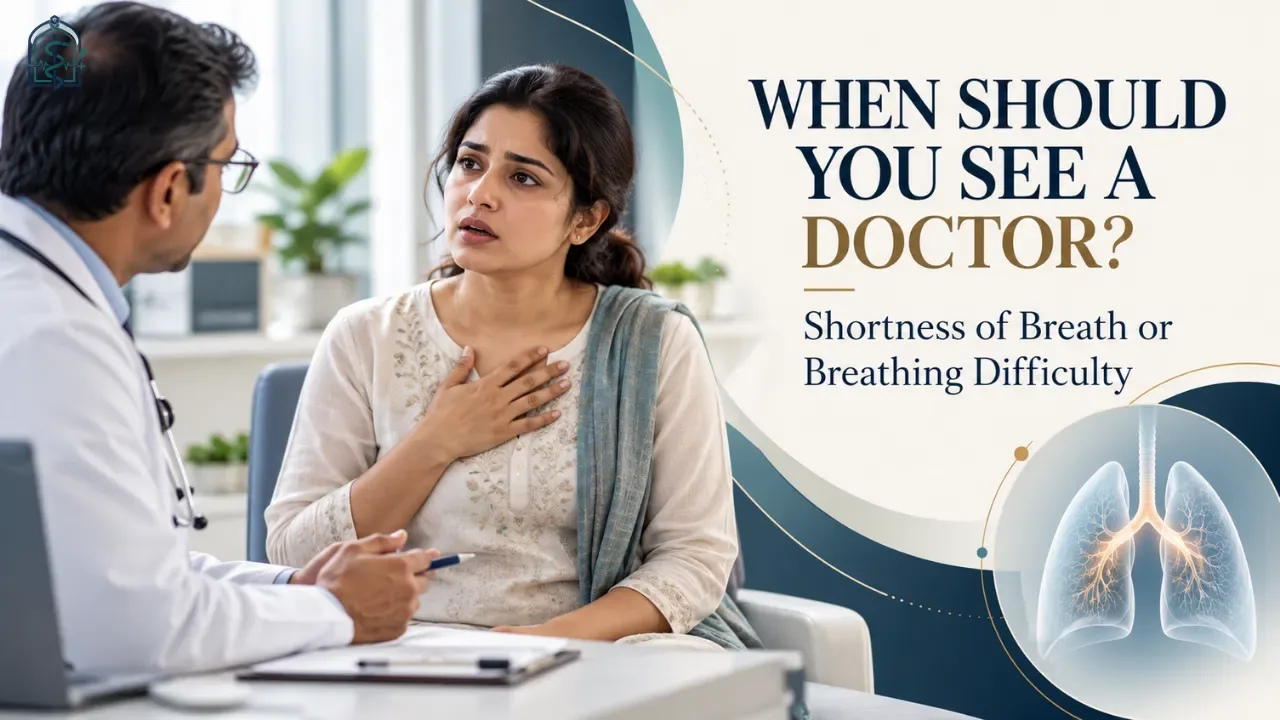
Brief breathlessness after hard exercise can be normal. See a doctor if breathlessness is new, worsening, happens during normal activity, wakes you at night or comes with wheeze, cough or chest tightness. Sudden severe breathlessness, chest pain, fainting or blue lips need emergency care.
In this guide
- 1What Does Shortness of Breath Mean?
- 2When Is Shortness of Breath Normal?
- 3Pay Attention to Changes in Your Breathing
- 4Common Causes of Shortness of Breath
- 5Lung-Related Causes
- 6Heart-Related Causes
- 7Other Possible Causes
- 8When Is Shortness of Breath an Emergency?
- 9What Will a Doctor Check?
- 10Don't Self-Diagnose Persistent Breathlessness
- 11Final Thoughts
What Does Shortness of Breath Mean?
For the wider picture, see our guide on Asthma Symptoms and Triggers: Causes, Diagnosis & Relief.
Shortness of breath, also called breathlessness or dyspnea, is the feeling that you cannot get enough air or are having difficulty breathing.
It can happen for a simple reason, such as intense exercise, but it can also be caused by conditions affecting the lungs, heart, blood, or other parts of the body.
The important question is not only how severe the breathlessness feels, but also when it happens, how long it lasts, and whether it is getting worse.
When Is Shortness of Breath Normal?
It is normal to breathe harder after strenuous exercise, especially if you are not accustomed to that level of activity.
Breathing should generally settle after you stop and rest.
However, breathlessness that occurs with routine activities, repeatedly wakes you at night, or appears without an obvious reason deserves medical attention.
Pay Attention to Changes in Your Breathing
You should consider speaking with a doctor if you notice:
-
Breathlessness during normal daily activities
-
Increasing difficulty walking or climbing stairs
-
Recurrent wheezing
-
Persistent cough
-
Chest tightness
-
Shortness of breath when lying down
-
Waking at night because you cannot breathe comfortably
-
A noticeable decline in your usual exercise tolerance
These symptoms can have many possible causes, so they should not automatically be attributed to asthma or poor fitness.
Common Causes of Shortness of Breath
Breathing difficulty can result from several conditions.
Lung-Related Causes
Asthma, COPD, respiratory infections, pneumonia, and other lung conditions can cause breathlessness.
Asthma may cause episodes of wheezing, coughing, chest tightness, and shortness of breath. COPD may cause persistent breathlessness, particularly with activity.
Heart-Related Causes
Some heart conditions can make it difficult to breathe, especially during physical activity or when lying down.
Shortness of breath accompanied by chest discomfort, swelling of the legs, or unusual fatigue should be medically assessed.
Other Possible Causes
anaemia, anxiety or panic attacks, certain medications, reduced fitness, and other medical conditions can also cause or contribute to breathlessness.
Because the causes are so varied, identifying the underlying problem is more useful than simply treating the symptom.
When Is Shortness of Breath an Emergency?
Some breathing problems require immediate medical attention.
Seek emergency care if you experience severe or rapidly worsening difficulty breathing, especially if it is accompanied by:
-
Chest pain or pressure
-
Fainting or severe dizziness
-
Confusion
-
Bluish or grey lips or skin
-
Severe weakness
-
Difficulty speaking because you are too breathless
-
Sudden breathlessness that is severe or unexpected
Do not wait for severe symptoms to improve on their own.
What Will a Doctor Check?
Your doctor will usually begin by asking when the breathlessness occurs, how long you have had it, whether it is worsening, and whether you have other symptoms.
Depending on your situation, the evaluation may include checking your oxygen level, heart rate, blood pressure, and lungs.
Further tests may include spirometry, chest imaging, blood tests, an electrocardiogram, or other investigations when clinically appropriate.
The tests depend on the suspected cause.
Don't Self-Diagnose Persistent Breathlessness
It is tempting to assume that shortness of breath is simply asthma, anxiety, age, or lack of fitness.
Sometimes it is, but not always.
Persistent or unexplained breathing difficulty deserves a proper medical assessment, particularly if it is new or getting worse.
You may also find these guides helpful: What Are the Symptoms of Asthma? Early Signs, Common Triggers and Warning Symptoms, Asthma vs COPD: What Is the Difference and How Can You Tell?, Why Am I Still Short of Breath Even With an Inhaler? Common Reasons and When to Get Help.
Final Thoughts
Shortness of breath is a symptom, not a diagnosis. While becoming breathless after strenuous exercise can be normal, unexplained, persistent, or worsening breathing difficulty should be evaluated by a healthcare professional. The cause may involve the lungs, heart, blood, medications, or other health conditions. If breathing becomes suddenly severe or is accompanied by chest pain, fainting, confusion, or other serious symptoms, seek emergency medical care immediately.
This article is for general information and does not replace personal medical advice.
Lungs, sleep and infections in Muscat: when to see an internist
Dr. James sees adults with asthma and breathing at Badr Al Samaa Royal Hospital, Al Ghubrah, by appointment.

Key takeaways
- Shortness of breath can have many causes, ranging from temporary exertion to heart or lung conditions.
- Breathlessness during routine activities or at rest should not be ignored.
- Wheezing, persistent cough, chest tightness, or reduced exercise tolerance may require medical evaluation.
- Sudden or severe breathing difficulty can be an emergency.
- Chest pain, fainting, confusion, or bluish lips or skin alongside breathlessness require urgent attention.
- Doctors may use examinations, oxygen measurements, spirometry, imaging, blood tests, or heart tests to identify the cause.
- Do not assume persistent breathlessness is simply asthma, anxiety, or poor fitness without appropriate evaluation.
Common questions
When should I see a doctor for shortness of breath?
See a doctor if breathlessness is unexplained, keeps returning, occurs during normal activities, affects your sleep, or is becoming worse.
Is shortness of breath always a sign of a lung problem?
No. Breathlessness can be caused by lung conditions such as asthma or COPD, but heart conditions, anaemia, anxiety, medications, and other problems can also contribute.
Can anxiety cause shortness of breath?
Yes. Anxiety and panic can cause a sensation of breathlessness or difficulty breathing. However, new or persistent symptoms should not automatically be assumed to be anxiety without appropriate medical evaluation.
Does smoking cause shortness of breath?
Smoking can damage the lungs and airways and is a common cause of long-term breathlessness. Stopping helps your lungs. Breathlessness in a smoker deserves a check even when it seems mild, because it can be the first sign of airway or heart disease.
Can being unfit cause shortness of breath?
Poor fitness can make you breathless sooner during activity, but new or worsening breathlessness should still be checked, as heart and lung conditions can cause similar symptoms.
Sources
- NHS: Asthma · nhs.uk
- CDC: Asthma · cdc.gov
This guide is for general information and does not replace a consultation. Editorial and medical review policy

Related areas of expertise

More in this guide series
 Asthma Symptoms and Triggers: Causes, Diagnosis & Relief
 What Are the Symptoms of Asthma? Early Signs, Common Triggers and Warning Symptoms
 Asthma vs COPD: What Is the Difference and How Can You Tell?
 Why Am I Still Short of Breath Even With an Inhaler? Common Reasons and When to Get Help
 How to Choose an Asthma and Breathing Specialist in Muscat: What to Look For