Asthma vs COPD: What Is the Difference and How Can You Tell?
Asthma and COPD can both cause coughing, wheezing, and shortness of breath, but they are different lung conditions. Learn how their symptoms, triggers, causes, and treatment approaches differ and why proper diagnosis matters.
 Written and reviewed by Dr. James Kumar Pallivathukkal, Specialist in Internal Medicine and DiabetesPublished 18 Oct 2026 · Reviewed by Dr. James Kumar Pallivathukkal on 18 October 2026 · 4 min readWhatsApp
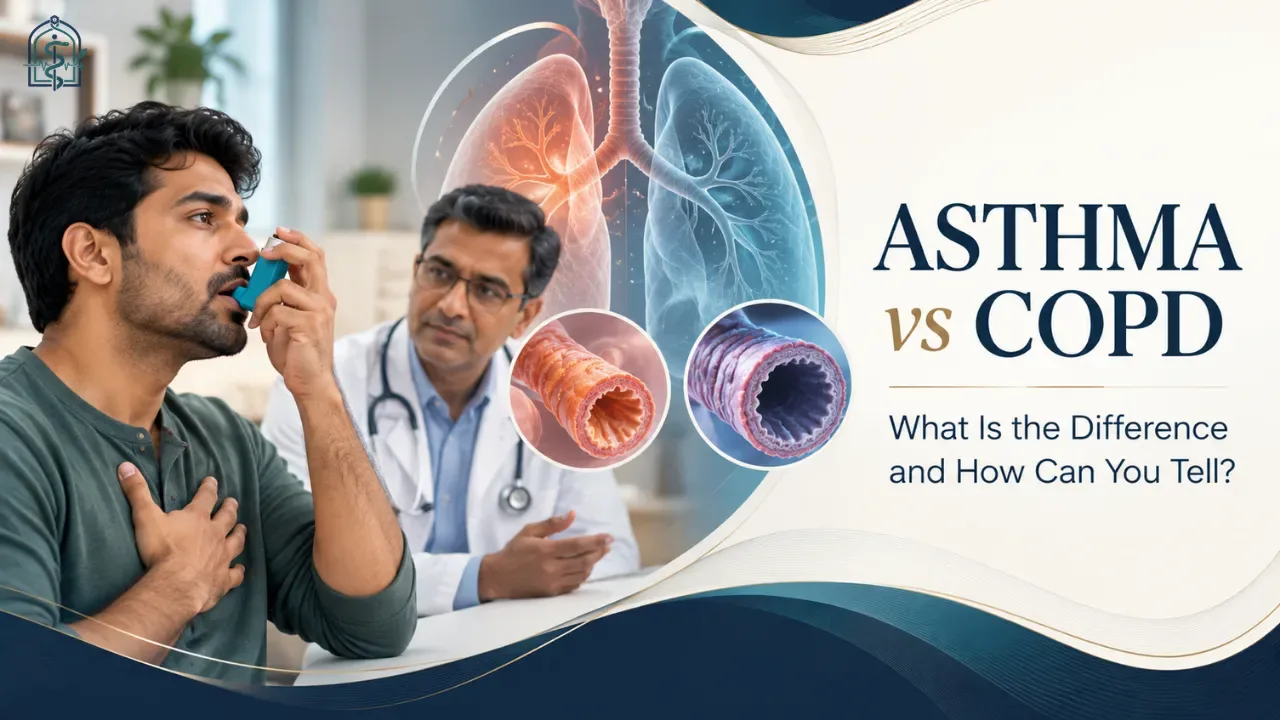
Asthma and COPD both cause cough, wheezing and breathlessness, but they differ. Asthma often varies over time and may start younger, with triggers such as allergies. COPD is usually persistent and progressive and is strongly linked to smoking and other long-term lung irritants. Lung function tests help tell them apart, and some people have both.
In this guide
Asthma and COPD: Similar Symptoms, Different Conditions
For the wider picture, see our guide on Asthma Symptoms and Triggers: Causes, Diagnosis & Relief.
Asthma and chronic obstructive pulmonary disease (COPD) can both cause breathing difficulties. Wheezing, coughing, chest tightness, and shortness of breath may occur with either condition.
That similarity can make it difficult to know which condition is responsible for your symptoms.
However, asthma and COPD are not the same disease. They have different patterns, risk factors, and approaches to diagnosis and treatment. Getting the correct diagnosis is important because treatment should be based on the underlying condition.
What Is Asthma?
Asthma is a chronic condition in which the airways become inflamed and narrowed.
Symptoms can vary over time and may be triggered by factors such as:
-
Allergens
-
Respiratory infections
-
Exercise
-
Cold air
-
Smoke and air pollution
-
Strong odors or chemical irritants
People with asthma may have periods when their breathing is normal and other times when symptoms become more noticeable.
Wheezing, coughing, chest tightness, and shortness of breath are common asthma symptoms.
What Is COPD?
COPD is a long-term lung disease that causes persistent airflow limitation. It includes conditions such as emphysema and chronic bronchitis.
Smoking is an important risk factor, although COPD can also occur in people who have never smoked. Long-term exposure to air pollution, workplace dust or fumes, and certain other factors can contribute to COPD.
Unlike asthma, COPD commonly causes symptoms that gradually become persistent or worsen over time.
Asthma vs COPD: The Main Differences
One useful way to understand the difference is to look at the pattern of symptoms.
-
Typical symptom pattern: Asthma: Often varies over time. COPD: Often persistent and progressive.
-
Common symptoms: Asthma: Wheezing, cough, chest tightness, breathlessness. COPD: Breathlessness, chronic cough, mucus production.
-
Common triggers: Asthma: Allergens, infections, exercise, cold air, irritants. COPD: Smoking and long-term exposure to lung irritants.
-
Airflow limitation: Asthma: Often variable. COPD: Usually persistent.
-
Diagnosis: Asthma: Clinical assessment and lung function testing. COPD: Clinical assessment and lung function testing.
These are general patterns, not rules. Some people have features of both conditions, and symptoms alone cannot reliably distinguish them.
Age and Medical History Can Provide Clues
Asthma can begin during childhood or adulthood. COPD is more commonly diagnosed later in life, particularly among people with significant exposure to tobacco smoke or other lung irritants.
However, age alone cannot establish a diagnosis.
Your smoking history, occupational exposures, allergies, previous respiratory problems, symptom pattern, and response to treatment may all be relevant.
How Are Asthma and COPD Diagnosed?
Doctors generally use your medical history, symptoms, physical examination, and lung function testing.
Spirometry is an important breathing test that measures how much air you can exhale and how quickly you can do it.
Additional testing may be recommended depending on your symptoms and medical history.
Because asthma and COPD can resemble other conditions, persistent breathlessness or chronic cough should not simply be assumed to be asthma or COPD.
Can Someone Have Both Asthma and COPD?
Yes. Some people have features of both conditions.
This can make diagnosis and treatment more complicated and is another reason not to rely on symptoms alone.
A healthcare professional can assess the overall clinical picture and determine the most appropriate treatment approach.
When Should You See a Doctor?
Arrange a medical evaluation if you have recurring wheezing, persistent cough, unexplained shortness of breath, reduced exercise tolerance, or frequent breathing problems.
Severe or rapidly worsening breathing difficulty requires urgent medical attention.
Do not wait for symptoms to become severe before seeking help.
You may also find these guides helpful: What Are the Symptoms of Asthma? Early Signs, Common Triggers and Warning Symptoms, When Should You See a Doctor for Shortness of Breath or Breathing Difficulty?, Why Am I Still Short of Breath Even With an Inhaler? Common Reasons and When to Get Help.
Final Thoughts
Asthma and COPD can look similar at first because both may cause coughing, wheezing, and shortness of breath. The key difference is the underlying pattern of airway and lung disease. Asthma often involves variable airway narrowing, while COPD generally causes persistent airflow limitation. If you regularly experience breathing problems, getting an accurate diagnosis is more useful than trying to determine the condition yourself. A medical evaluation and appropriate lung function testing can help guide the right treatment.
This article is for general information and does not replace personal medical advice.
Lungs, sleep and infections in Muscat: when to see an internist
Dr. James sees adults with asthma and breathing at Badr Al Samaa Royal Hospital, Al Ghubrah, by appointment.

Key takeaways
- Asthma and COPD can cause similar symptoms but are different lung conditions.
- Asthma symptoms often vary and may be triggered by allergens, infections, exercise, or irritants.
- COPD commonly causes persistent airflow limitation and is strongly associated with long-term exposure to smoking and other lung irritants.
- Spirometry is an important test used when evaluating both conditions.
- Symptoms alone cannot reliably distinguish asthma from COPD.
- Some people may have features of both conditions.
- Persistent or worsening breathing problems should be medically evaluated.
Common questions
What is the main difference between asthma and COPD?
Asthma typically involves variable airway narrowing and symptoms that can come and go, while COPD generally causes persistent airflow limitation and tends to progress over time.
Can asthma turn into COPD?
Asthma does not simply “turn into” COPD. They are different conditions, although long-standing asthma can be associated with persistent changes in lung function in some people. Some individuals can also have features of both conditions.
Is wheezing more common in asthma or COPD?
Wheezing can occur in both asthma and COPD. It is not specific enough to determine which condition a person has. The pattern around it — age, smoking history, triggers and lung function tests — is what separates the two.
Can a lung function test diagnose asthma or COPD?
Spirometry measures how much air you breathe out and how fast. It is an important test to help diagnose both conditions, alongside your history and examination.
Does quitting smoking help COPD?
Stopping smoking is one of the most important steps to slow lung damage. Your doctor can support you with advice and treatment options.
Sources
- NHS: Asthma · nhs.uk
- NHS: COPD · nhs.uk
This guide is for general information and does not replace a consultation. Editorial and medical review policy

Related areas of expertise
More in this guide series
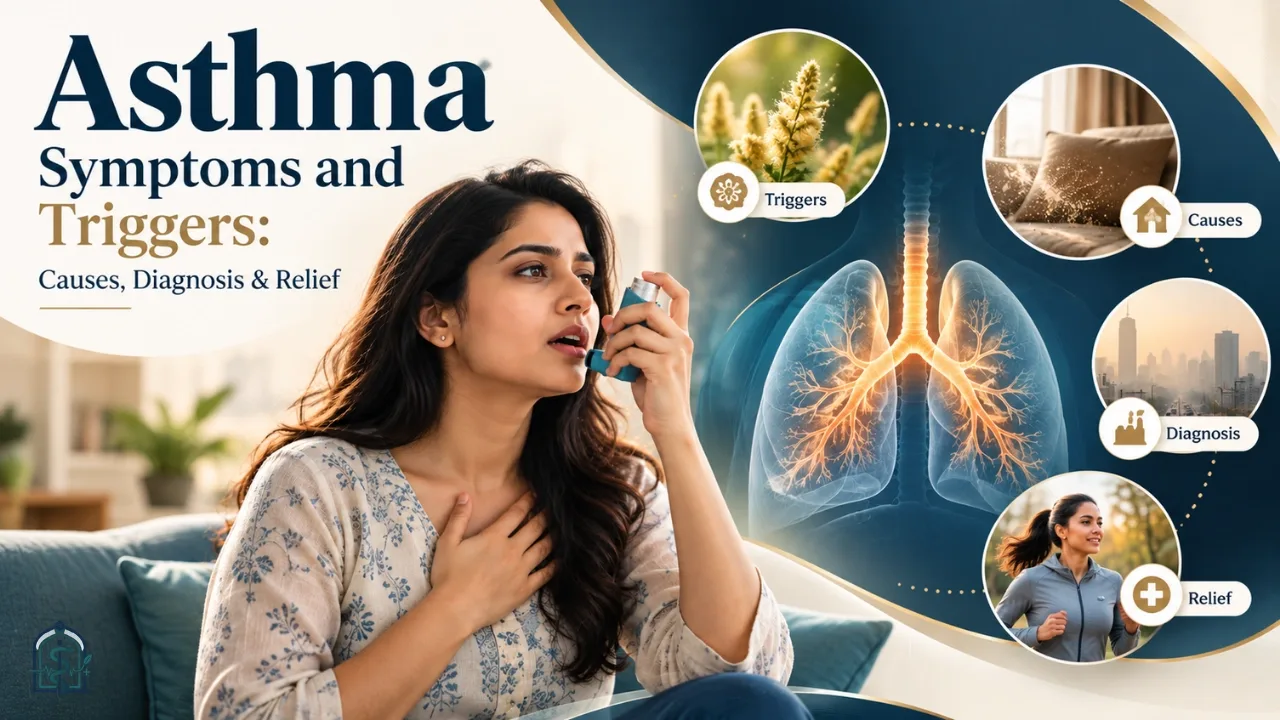 Asthma Symptoms and Triggers: Causes, Diagnosis & Relief
 What Are the Symptoms of Asthma? Early Signs, Common Triggers and Warning Symptoms
 When Should You See a Doctor for Shortness of Breath or Breathing Difficulty?
 Why Am I Still Short of Breath Even With an Inhaler? Common Reasons and When to Get Help
 How to Choose an Asthma and Breathing Specialist in Muscat: What to Look For