Why Am I Still Short of Breath Even With an Inhaler? Common Reasons and When to Get Help
Still feeling short of breath despite using an inhaler can be frustrating. The problem may involve asthma control, inhaler technique, another lung condition, or a non-respiratory cause.
 Written and reviewed by Dr. James Kumar Pallivathukkal, Specialist in Internal Medicine and DiabetesPublished 18 Oct 2026 · Reviewed by Dr. James Kumar Pallivathukkal on 18 October 2026 · 4 min readWhatsApp

Ongoing breathlessness despite an inhaler can mean asthma is not well controlled, inhaler technique needs checking, the inhaler type does not match the problem, or another condition such as COPD, heart disease or anaemia is involved. Do not keep taking extra doses beyond what your doctor advised. Get your treatment reviewed.
In this guide
- 1Why Am I Still Short of Breath After Using My Inhaler?
- 2Your Asthma May Not Be Fully Controlled
- 3Your Inhaler Technique May Matter
- 4You May Be Using the Wrong Type of Inhaler for the Problem
- 5Your Breathlessness May Have Another Cause
- 6Could It Be COPD or Another Lung Condition?
- 7Lung Function Testing Can Help
- 8When Should You Get Urgent Help?
- 9What Should You Do If Breathlessness Keeps Returning?
- 10Final Thoughts
Why Am I Still Short of Breath After Using My Inhaler?
For the wider picture, see our guide on Asthma Symptoms and Triggers: Causes, Diagnosis & Relief.
If you use an inhaler for asthma but continue to feel short of breath, it does not necessarily mean that your inhaler is “not working.”
There can be several reasons for ongoing breathlessness. Your asthma may not be adequately controlled, the inhaler may not be reaching your lungs effectively, or your symptoms may have another cause.
The important point is that persistent breathing difficulty should not simply be ignored or treated by repeatedly increasing your inhaler use without medical advice.
Your Asthma May Not Be Fully Controlled
Asthma symptoms can include wheezing, coughing, chest tightness, and shortness of breath.
If your airways remain inflamed or narrowed, you may continue to experience symptoms even when using medication.
Triggers such as respiratory infections, smoke, air pollution, allergens, exercise, or cold air can also make symptoms worse.
Your doctor may need to review your symptoms and current treatment to determine whether your asthma is adequately controlled.
Your Inhaler Technique May Matter
Using an inhaler correctly is more important than many people realize.
If the medication is not inhaled properly, less of it may reach the airways.
Common technique problems can include incorrect timing between pressing the inhaler and breathing in, inhaling too quickly or too slowly for the particular device, or failing to follow the device's instructions.
A healthcare professional can watch your technique and show you how to use your specific inhaler correctly.
You May Be Using the Wrong Type of Inhaler for the Problem
Different inhalers have different purposes.
Some provide quick relief of airway narrowing, while others are intended for regular treatment to reduce airway inflammation and prevent symptoms.
Using one type when another treatment is needed may leave symptoms inadequately controlled.
Do not change your inhaler, dose, or frequency on your own. Your treatment plan should be based on your diagnosis and symptoms.
Your Breathlessness May Have Another Cause
Not every episode of shortness of breath is caused by asthma.
Conditions such as COPD, respiratory infections, heart problems, anaemia, anxiety, or other medical conditions can cause breathlessness.
Some people may also have more than one condition at the same time.
This is why persistent symptoms deserve reassessment rather than simply assuming that asthma is responsible.
Could It Be COPD or Another Lung Condition?
COPD can cause ongoing breathlessness, coughing, and reduced exercise tolerance. It is more common in people with significant exposure to tobacco smoke or other lung irritants.
If your symptoms are persistent, particularly if they have gradually worsened over time, your doctor may consider other lung conditions.
Lung Function Testing Can Help
Spirometry is a common breathing test that measures how much air you can breathe out and how quickly you can do so.
Depending on your symptoms and medical history, your doctor may recommend spirometry or other investigations to clarify the cause of your breathlessness.
When Should You Get Urgent Help?
Do not rely on an inhaler alone if you are experiencing severe or rapidly worsening breathing difficulty.
Seek urgent medical attention if you are struggling to breathe, cannot speak normally because of breathlessness, develop bluish or grey lips or skin, become confused or faint, or have severe chest pain or pressure.
If your prescribed rescue treatment is not providing the expected relief and your breathing remains severely difficult, seek urgent care.
What Should You Do If Breathlessness Keeps Returning?
If you regularly feel short of breath despite using your inhaler, arrange a medical review.
Your doctor may assess your symptoms, inhaler technique, medication use, possible triggers, lung function, and other health conditions.
Do not increase the frequency of your inhaler or start additional medication without professional advice.
You may also find these guides helpful: What Are the Symptoms of Asthma? Early Signs, Common Triggers and Warning Symptoms, Asthma vs COPD: What Is the Difference and How Can You Tell?, When Should You See a Doctor for Shortness of Breath or Breathing Difficulty?.
Final Thoughts
Being short of breath despite using an inhaler is a reason to reassess the situation, not simply to take more medication. The cause may be uncontrolled asthma, inhaler technique, ongoing triggers, or an entirely different medical condition. If breathlessness keeps returning or is getting worse, speak with a healthcare professional for a proper evaluation. If breathing becomes severe or rapidly deteriorates, seek urgent medical care.
This article is for general information and does not replace personal medical advice.
Lungs, sleep and infections in Muscat: when to see an internist
Dr. James sees adults with asthma and breathing at Badr Al Samaa Royal Hospital, Al Ghubrah, by appointment.

Key takeaways
- Persistent breathlessness despite an inhaler can have several possible causes.
- Asthma may not be adequately controlled, or triggers may be continuing to affect your airways.
- Incorrect inhaler technique can reduce how much medication reaches the lungs.
- Different inhalers serve different purposes, so treatment should be individualized.
- COPD, heart conditions, infections, anaemia, anxiety, and other conditions can also cause breathlessness.
- Spirometry may help doctors assess lung function when appropriate.
- Severe or rapidly worsening breathing difficulty requires urgent medical attention.
Common questions
Why am I still short of breath after using my inhaler?
Possible reasons include poorly controlled asthma, ongoing exposure to triggers, incorrect inhaler technique, an unsuitable treatment plan, or another condition causing breathlessness. A medical review can help identify the cause.
Can using an inhaler incorrectly make it less effective?
Yes. Incorrect technique can prevent the medication from reaching the lungs effectively. Ask a healthcare professional to check your technique if you are unsure how to use your inhaler.
Should I take more puffs if my inhaler is not helping?
Do not take additional doses beyond your prescribed instructions unless your healthcare professional has given you a specific action plan. If your breathing remains severely difficult or your prescribed rescue treatment is not providing expected relief, seek urgent medical attention.
Can a spacer help my inhaler work better?
A spacer can help many people get more medicine into the lungs. Ask your doctor or pharmacist whether one suits your inhaler.
Should I change my inhaler dose on my own?
No. Do not increase or stop doses without advice from your doctor. If your inhaler is not working as expected, get your treatment reviewed.
Sources
- NHS: Asthma · nhs.uk
This guide is for general information and does not replace a consultation. Editorial and medical review policy

More in this guide series
 Asthma Symptoms and Triggers: Causes, Diagnosis & Relief
 What Are the Symptoms of Asthma? Early Signs, Common Triggers and Warning Symptoms
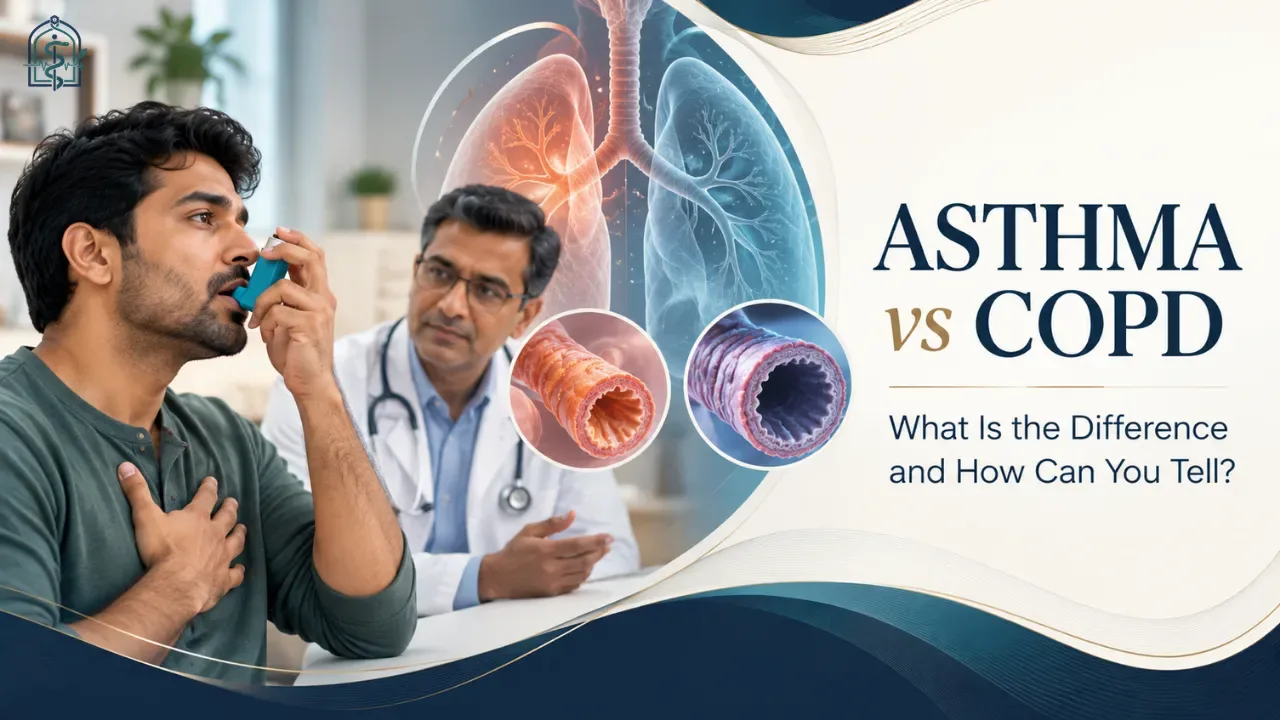 Asthma vs COPD: What Is the Difference and How Can You Tell?
 When Should You See a Doctor for Shortness of Breath or Breathing Difficulty?
 How to Choose an Asthma and Breathing Specialist in Muscat: What to Look For