Think You Might Have Sleep Apnea? A Step-by-Step Guide to Getting Evaluated
Loud snoring, gasping during sleep, morning headaches, and daytime tiredness can be signs of sleep apnea. Learn how sleep apnea is evaluated, which tests may be recommended, and what to expect during the evaluation process.
 Written and reviewed by Dr. James Kumar Pallivathukkal, Specialist in Internal Medicine and DiabetesPublished 16 Oct 2026 · Reviewed by Dr. James Kumar Pallivathukkal on 16 October 2026 · 4 min readWhatsApp
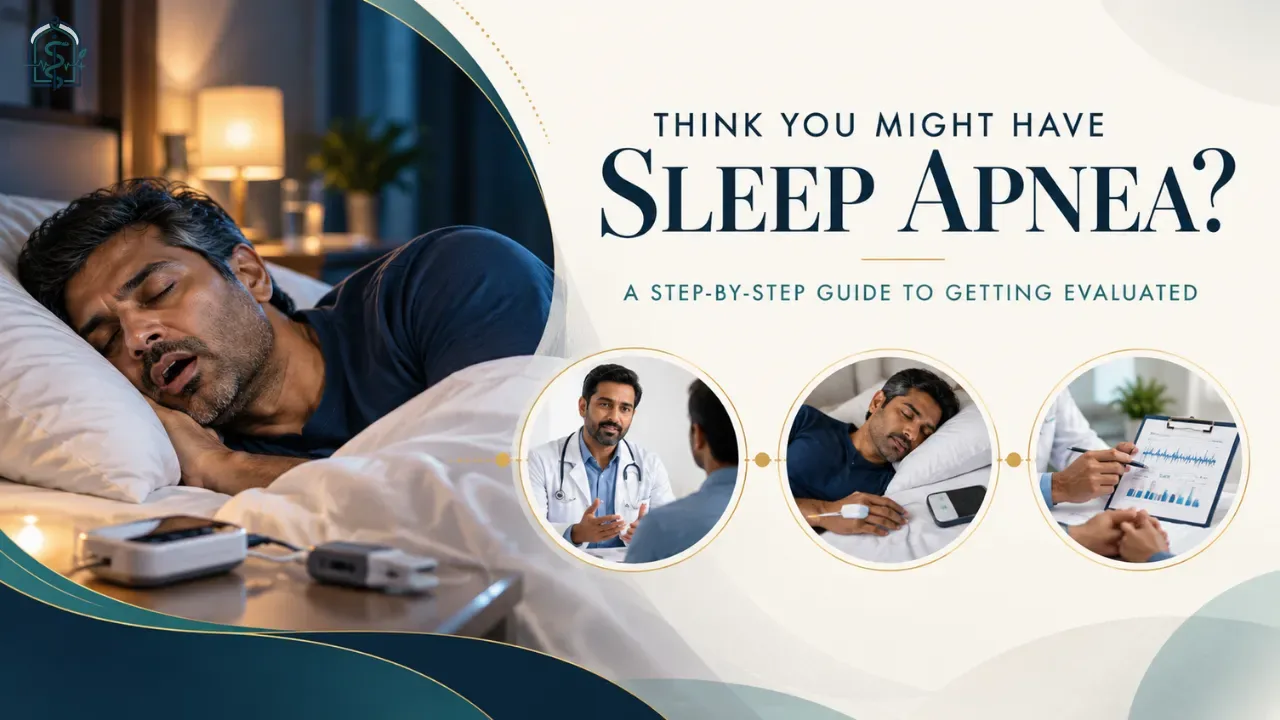
If you suspect sleep apnea, start by noting your symptoms, such as loud snoring, gasping, morning headaches and daytime sleepiness. Talk to a doctor, complete a screening questionnaire, and have the sleep study your doctor recommends. Treatment depends on the results, so getting tested is the key step.
In this guide
- 1Could Your Sleep Problems Be Sleep Apnea?
- 2Step 1: Recognise the Warning Signs
- 3Pay Attention to Daytime Sleepiness
- 4Step 2: Discuss Your Symptoms With a Doctor
- 5Step 3: Complete a Sleep Apnea Screening Assessment
- 6Step 4: Have the Appropriate Sleep Study
- 7What Happens After Testing?
- 8Step 5: Take Daytime Sleepiness Seriously
- 9When to See a Doctor
- 10Final Thoughts
Could Your Sleep Problems Be Sleep Apnea?
For the wider picture, see our guide on Common Sleep Disorders: Symptoms, Causes & Health Effects.
Getting enough hours of sleep but still waking up exhausted can be frustrating. If you also snore loudly, wake up gasping, or someone has noticed pauses in your breathing while you sleep, sleep apnea may be worth investigating.
Sleep apnea is a sleep disorder in which breathing repeatedly becomes reduced or stops during sleep. The most common type is obstructive sleep apnea (OSA), which occurs when the upper airway becomes narrowed or blocked.
Having symptoms does not automatically mean you have sleep apnea. A proper evaluation can help determine what is actually causing your sleep problems.
Step 1: Recognise the Warning Signs
Possible symptoms of sleep apnea include:
-
Loud or frequent snoring
-
Gasping, choking, or snorting during sleep
-
Breathing pauses noticed by a bed partner
-
Excessive daytime sleepiness
-
Morning headaches
-
Dry mouth after waking
-
Difficulty concentrating
-
Irritability or mood changes
-
Frequent nighttime urination
Not everyone with sleep apnea snores, and symptoms can vary considerably between individuals.
Pay Attention to Daytime Sleepiness
Repeated breathing disturbances can fragment your sleep even if you do not remember waking up.
As a result, you may feel tired, unfocused, or unusually sleepy during the day. If you regularly struggle to stay awake during work, while watching television, or during routine activities, tell your doctor.
Step 2: Discuss Your Symptoms With a Doctor
The evaluation usually starts with a medical and sleep history.
Your doctor may ask about your sleep schedule, snoring, nighttime awakenings, daytime sleepiness, medications, alcohol use, existing medical conditions, and other symptoms.
If someone sleeps near you, their observations can be especially useful. They may notice breathing pauses, choking sounds, or unusual movements that you do not remember.
Your doctor may also assess factors such as blood pressure, weight, and other aspects of your general health.
Step 3: Complete a Sleep Apnea Screening Assessment
Healthcare professionals may use a sleep apnea screening questionnaire to identify people who may be at increased risk.
Screening tools can be helpful, but they do not by themselves diagnose sleep apnea.
If your symptoms and clinical assessment suggest that further testing is appropriate, your doctor may recommend a sleep study.
Step 4: Have the Appropriate Sleep Study
A sleep study records information about your body while you sleep.
Depending on your circumstances, testing may be performed at home or in a sleep laboratory.
A home sleep apnea test can monitor measurements related to breathing and oxygen levels during sleep. A laboratory polysomnogram can collect more detailed information about sleep stages, breathing, heart activity, oxygen levels, and body movements.
The appropriate test depends on your symptoms, medical history, and clinical assessment.
What Happens After Testing?
A qualified healthcare professional reviews the results and determines whether the findings are consistent with sleep apnea.
If sleep apnea is diagnosed, treatment depends on the type and severity of the condition and your individual needs. Options may include positive airway pressure therapy, oral appliances, lifestyle measures, positional strategies, or other treatments when appropriate.
Step 5: Take Daytime Sleepiness Seriously
Untreated sleep apnea can affect alertness, concentration, and daily functioning.
Excessive sleepiness can also create a safety concern, particularly when driving or operating machinery.
If you feel too sleepy to drive safely, do not try to push through it. Stop driving and seek medical advice.
When to See a Doctor
See a doctor if you snore loudly with daytime sleepiness, wake gasping, or have high blood pressure that is hard to control. Never drive or operate machinery when you are very drowsy.
You may also find these guides helpful: Sleep Apnea or Insomnia? Why the Symptoms Overlap and How to Tell Them Apart, New Medication Options for Sleep Apnea: What Patients Should Know, Primary Care Doctor or Sleep Specialist? Who Should Manage Your Sleep Problem.
Final Thoughts
If you think you may have sleep apnea, you do not need to diagnose yourself. Start by discussing your symptoms with a doctor. A careful medical history, risk assessment, and appropriate sleep testing can help determine whether repeated breathing disturbances are affecting your sleep. Identifying the problem is the first step toward choosing treatment that can improve sleep quality, daytime alertness, and overall health.
This article is for general information and does not replace personal medical advice.
Lungs, sleep and infections in Muscat: when to see an internist
Dr. James sees adults with sleep apnea and sleep problems at Badr Al Samaa Royal Hospital, Al Ghubrah, by appointment.

Key takeaways
- Loud snoring, gasping, witnessed breathing pauses, and excessive daytime sleepiness can be warning signs of sleep apnea.
- Not everyone with sleep apnea snores.
- Evaluation generally begins with a detailed medical and sleep history.
- Screening questionnaires can help identify people who may need further assessment.
- A home sleep apnea test or laboratory sleep study may be recommended depending on the individual.
- Testing helps determine whether sleep apnea is present and guides further management.
- Significant daytime sleepiness should not be ignored, particularly when driving.
Common questions
What are the first signs of sleep apnea?
Common warning signs include loud snoring, gasping or choking during sleep, witnessed breathing pauses, morning headaches, dry mouth, and excessive daytime sleepiness.
Can I have sleep apnea without snoring?
Yes. Although snoring is common, not everyone with sleep apnea snores. Other symptoms and risk factors should also be considered.
How is sleep apnea diagnosed?
Diagnosis generally involves a clinical evaluation followed by an appropriate sleep study when indicated. Depending on the person's circumstances, this may be a home sleep apnea test or an overnight laboratory sleep study.
Do I always need an overnight sleep study?
Your doctor decides which test suits you. Some people can have a home sleep test, while others need a study in a sleep centre.
What happens if the sleep study confirms sleep apnea?
Your doctor will discuss treatment options, which may include CPAP, an oral appliance, weight management or other measures, based on severity and your health.
Sources
- NHS: Sleep apnoea · nhs.uk
- NHLBI: What is sleep apnea? · nhlbi.nih.gov
This guide is for general information and does not replace a consultation. Editorial and medical review policy

More in this guide series
 Common Sleep Disorders: Symptoms, Causes & Health Effects
 Sleep Apnea or Insomnia? Why the Symptoms Overlap and How to Tell Them Apart
 Is Melatonin Safe to Take Every Night? What the New Heart Research Actually Shows
 New Medication Options for Sleep Apnea: What Patients Should Know
 Primary Care Doctor or Sleep Specialist? Who Should Manage Your Sleep Problem
Keep reading


Snoring, insomnia, daytime tiredness
Book about thisRead about sleep apnea