Sleep Apnea or Insomnia? Why the Symptoms Overlap and How to Tell Them Apart
Trouble sleeping, waking during the night, and feeling tired during the day can occur with both insomnia and sleep apnea. Learn how these conditions differ, which symptoms can overlap, and when a proper sleep evaluation may be needed.
 Written and reviewed by Dr. James Kumar Pallivathukkal, Specialist in Internal Medicine and DiabetesPublished 15 Oct 2026 · Reviewed by Dr. James Kumar Pallivathukkal on 15 October 2026 · 4 min readWhatsApp
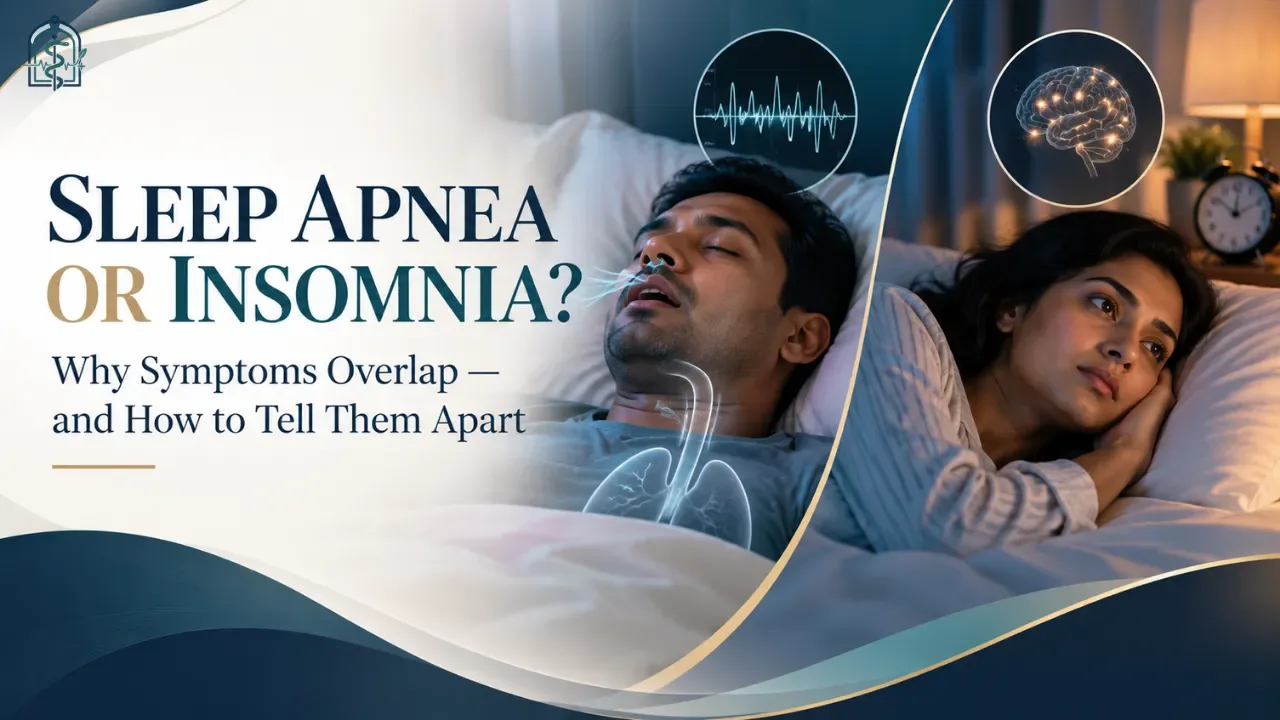
Sleep apnea and insomnia can both leave you tired and unrefreshed, but they are different. Insomnia is trouble falling or staying asleep. Sleep apnea involves breathing pauses during sleep, often with loud snoring, gasping and morning headaches. You can have both, and a proper sleep evaluation can tell them apart.
In this guide
Why Can Sleep Apnea and Insomnia Feel So Similar?
For the wider picture, see our guide on Common Sleep Disorders: Symptoms, Causes & Health Effects.
If you regularly wake up tired, struggle to stay asleep, or find yourself exhausted during the day, it can be difficult to know what is actually causing the problem.
Insomnia and sleep apnea are different sleep disorders, but their symptoms can overlap. Both can leave you feeling unrefreshed, fatigued, and less able to concentrate during the day.
The difference is often found in what is happening during sleep.
What Is Insomnia?
Insomnia is a sleep disorder involving persistent difficulty falling asleep, staying asleep, or getting good-quality sleep despite having an opportunity to sleep.
Someone with insomnia may lie awake for a long time before falling asleep, wake repeatedly during the night, or wake earlier than intended and struggle to return to sleep.
Stress, anxiety, medications, medical conditions, irregular schedules, and other factors can contribute to insomnia.
Typical Clues
People with insomnia often notice the problem themselves because they are aware of being awake or unable to sleep.
They may also experience daytime fatigue, irritability, difficulty concentrating, or concerns about getting enough sleep.
What Is Sleep Apnea?
Obstructive sleep apnea (OSA) occurs when the upper airway repeatedly becomes narrowed or blocked during sleep, disrupting normal breathing.
A person may not remember these breathing interruptions. Instead, a bed partner may notice loud snoring, choking, gasping, or pauses in breathing.
Sleep apnea can also cause fragmented sleep and excessive daytime sleepiness.
Common Warning Signs
Look for clues such as:
-
Loud, frequent snoring
-
Gasping or choking during sleep
-
Breathing pauses noticed by another person
-
Morning headaches
-
Dry mouth after waking
-
Excessive daytime sleepiness
-
Difficulty concentrating
Not everyone with sleep apnea snores, so the absence of snoring does not completely rule it out.
Where the Symptoms Overlap
Both conditions can cause:
-
Poor-quality sleep
-
Daytime tiredness
-
Difficulty concentrating
-
Irritability or mood changes
-
Frequent nighttime awakenings
This overlap is one reason people may assume they have insomnia when an underlying sleep-related breathing disorder is actually contributing to their symptoms.
The Clues That Point Toward Sleep Apnea
One of the most useful distinctions is how the sleep problem presents.
If you are awake for long periods worrying about sleep or unable to fall asleep despite feeling tired, insomnia may be contributing.
If someone tells you that you snore loudly, stop breathing, gasp, or choke during sleep, sleep apnea becomes more important to consider.
Other clues include persistent morning headaches, dry mouth, or significant daytime sleepiness despite apparently sleeping for enough hours.
You Can Have Both
Insomnia and sleep apnea are not mutually exclusive.
Some people can have difficulty falling or staying asleep while also experiencing repeated breathing disturbances during sleep. When symptoms persist, it is important to avoid assuming there is only one explanation.
How Are They Diagnosed?
Diagnosis begins with a detailed medical and sleep history.
Your doctor may ask about your sleep schedule, nighttime symptoms, daytime alertness, medications, lifestyle, and other medical conditions.
If sleep apnea is suspected, a sleep study may be recommended. Depending on your circumstances, this may involve a home sleep apnea test or an overnight laboratory study.
Insomnia is usually assessed through your sleep history and symptoms. A sleep diary or other assessment may sometimes be useful.
When Should You Seek Help?
Consider speaking with a healthcare professional if sleep problems are persistent, affect your daily functioning, or leave you excessively sleepy during the day.
If you regularly struggle to stay awake while driving or performing potentially dangerous activities, take the situation seriously. Avoid driving when you are too sleepy and seek medical advice.
You may also find these guides helpful: Think You Might Have Sleep Apnea? A Step-by-Step Guide to Getting Evaluated, Is Melatonin Safe to Take Every Night? What the New Heart Research Actually Shows, New Medication Options for Sleep Apnea: What Patients Should Know.
Final Thoughts
Insomnia and sleep apnea can look similar from the outside because both can leave you tired, irritable, and unable to concentrate. The important difference is what is causing the disrupted sleep. Difficulty falling or staying asleep may suggest insomnia, while snoring, gasping, breathing pauses, and significant daytime sleepiness can point toward sleep apnea. If your sleep problems continue, a medical evaluation can help identify the underlying cause and guide appropriate treatment.
This article is for general information and does not replace personal medical advice.
Lungs, sleep and infections in Muscat: when to see an internist
Dr. James sees adults with sleep apnea and sleep problems at Badr Al Samaa Royal Hospital, Al Ghubrah, by appointment.

Key takeaways
- Sleep apnea and insomnia are different conditions but can cause similar daytime symptoms.
- Insomnia primarily involves difficulty falling asleep, staying asleep, or getting restorative sleep.
- Sleep apnea involves repeated interruptions in breathing during sleep.
- Loud snoring, gasping, choking, or witnessed breathing pauses can point toward sleep apnea.
- A person can have both insomnia and sleep apnea.
- Persistent sleep problems should be evaluated rather than treated based only on assumptions.
- A sleep study may be recommended when sleep apnea is suspected.
Common questions
Can sleep apnea be mistaken for insomnia?
Yes. Sleep apnea can cause repeated nighttime awakenings and poor-quality sleep, which may feel like insomnia. Some people may also have both conditions.
How can I tell if I have sleep apnea or insomnia?
Insomnia commonly involves difficulty falling asleep or staying asleep. Sleep apnea is more strongly associated with symptoms such as loud snoring, gasping, choking, or witnessed breathing pauses. A medical evaluation may be needed to determine the cause.
Can you have insomnia and sleep apnea at the same time?
Yes. The two conditions can occur together. If sleep difficulties continue despite addressing one problem, your doctor may consider whether another sleep disorder is contributing.
Can a bed partner notice sleep apnea?
Often, yes. Loud snoring, gasping and pauses in breathing are commonly noticed by a partner before the person realises. Witnessed pauses in breathing are one of the strongest clues that snoring is actually sleep apnea.
Is insomnia treated differently from sleep apnea?
Yes. Insomnia care focuses on sleep habits, thinking patterns and sometimes medicine. Sleep apnea treatment focuses on keeping the airway open, such as with CPAP.
Sources
- NHS: Sleep apnoea · nhs.uk
- NHS: Insomnia · nhs.uk
This guide is for general information and does not replace a consultation. Editorial and medical review policy

More in this guide series
 Common Sleep Disorders: Symptoms, Causes & Health Effects
 Is Melatonin Safe to Take Every Night? What the New Heart Research Actually Shows
 Think You Might Have Sleep Apnea? A Step-by-Step Guide to Getting Evaluated
 New Medication Options for Sleep Apnea: What Patients Should Know
 Primary Care Doctor or Sleep Specialist? Who Should Manage Your Sleep Problem
Keep reading


Snoring, insomnia, daytime tiredness
Book about thisRead about sleep apnea