CGM or A1C: Which Test Actually Catches Prediabetes Early?
A1C remains the test that diagnoses prediabetes. A CGM shows something different: how your glucose behaves after meals and overnight. Here is how to use each one.
 Written and reviewed by Dr. James Kumar Pallivathukkal, Specialist in Internal Medicine and DiabetesPublished 1 Oct 2026 · Reviewed by Dr. James Kumar Pallivathukkal on 1 October 2026 · 4 min readWhatsApp
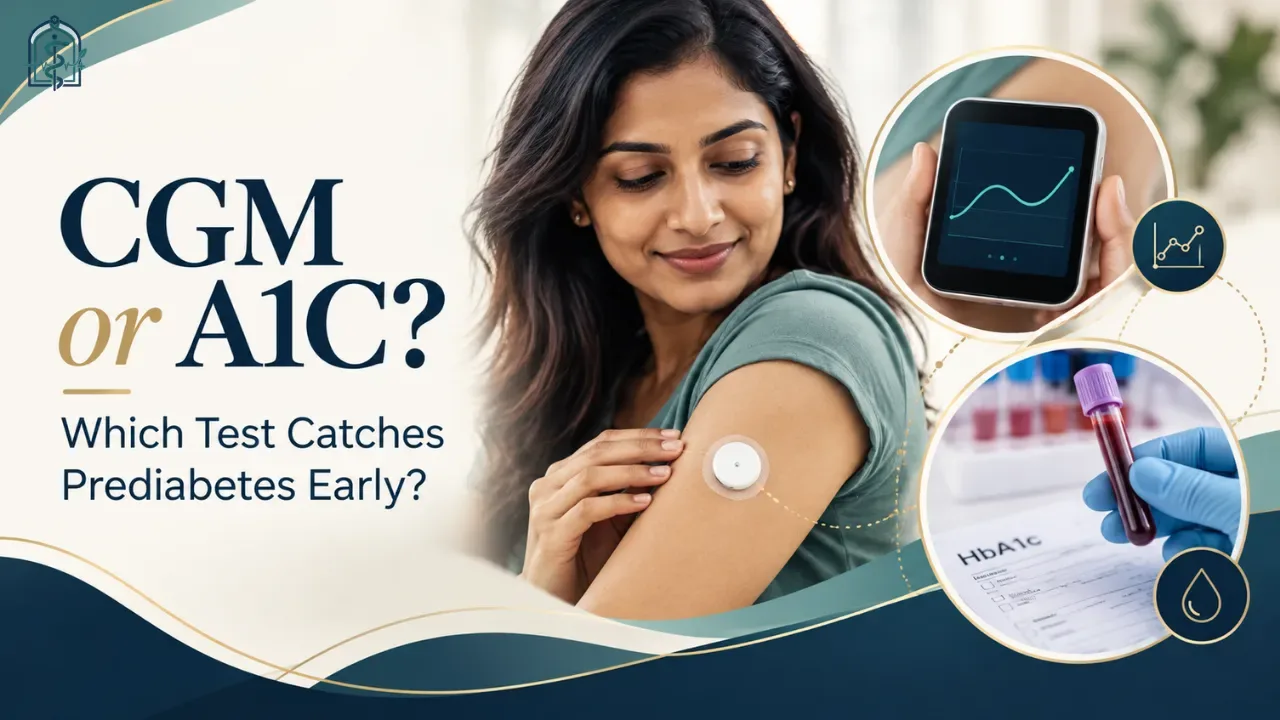
A1C is the standard test for diagnosing prediabetes. A CGM cannot diagnose it. What a CGM adds is a view of how your glucose rises after meals and moves through the night, details an A1C average can hide. Use CGM data as information to bring to your doctor.
In this guide
Many patients now ask about continuous glucose monitors (CGMs) after seeing them on social media. Some companies sell these sensors to people without diabetes, and the marketing can make them sound like a better version of a blood test. They are not. A1C and CGMs measure related things, but they answer different questions, and the right choice depends on what you are trying to find out.
For the wider picture, see our guide on early warning signs of prediabetes.
What Does an A1C Test Measure?
A1C estimates your average blood glucose over the past two to three months. It requires one blood sample, and fasting is not needed.
Below 5.7% is considered normal. A result from 5.7% to 6.4% falls in the prediabetes range, and 6.5% or higher is in the diabetes range.
Because it is an average, two people can have the same A1C and very different days. One may spike sharply after lunch and then settle back to normal. The other may stay fairly even all day. A1C alone cannot distinguish them.
A1C can also mislead in certain people. anaemia, recent blood loss or transfusion, kidney disease, pregnancy and inherited haemoglobin disorders such as thalassemia can all shift the reading. Thalassemia is found in parts of the Gulf region, so if you know you have a blood condition, mention it before your doctor relies on A1C alone.
What Does a CGM Show?
A CGM is a small sensor worn on the upper arm or abdomen. It measures glucose in the fluid beneath the skin every few minutes, and most sensors stay in place for 10 to 15 days.
Rather than one number, you get a daily pattern. A CGM can show:
-
How high glucose climbs after breakfast, lunch or dinner
-
How many hours a day glucose stays above the usual range
-
Lows overnight or in the early morning
-
Whether poor sleep, stress or specific meals line up with spikes
Glucose can rise after eating well before the three-month average changes. This is why a CGM sometimes shows early shifts that the A1C has not yet picked up.
Can a CGM Diagnose Prediabetes?
No. Diagnosis still rests on A1C, fasting plasma glucose or the oral glucose tolerance test. The American Diabetes Association guidance I reviewed still uses these tests for diagnosis. CGMs are most firmly established as a tool for managing diabetes.
Consumer CGMs have limits too. The sensor measures interstitial fluid, which lags behind blood glucose by several minutes. Accuracy in people without diabetes has been studied less thoroughly. A single high reading after a meal can also cause needless worry, and it often says less than the overall pattern does.
Which Test Finds Prediabetes Earlier?
For a diagnosis, A1C or fasting glucose is the reliable choice. For spotting early trouble with blood sugar control, a CGM may reveal patterns that a blood test misses.
The two complement each other. A normal A1C alongside frequent large spikes after meals is a good reason to review your diet and activity, and to ask your doctor whether further testing makes sense.
What Should You Do Next?
If you have risk factors, such as a parent or sibling with type 2 diabetes, excess weight, high blood pressure, gestational diabetes in a past pregnancy or polycystic ovary syndrome, ask your doctor about glucose testing now. Waiting for symptoms is the wrong trigger.
If you are thinking about a CGM, bring the readings to your appointment. Do not start, stop or adjust diabetes medicine based on sensor data alone.
Patients in Muscat who want a personal assessment can ask an internist to review their A1C history, risk factors and any CGM data together.
When Should You See a Doctor?
See a doctor soon if you notice increased thirst, frequent urination, weight loss you cannot explain, blurred vision or unusual tiredness.
Seek urgent care if you develop confusion, drowsiness, persistent vomiting, severe belly pain or difficulty breathing, particularly alongside very high glucose readings.
You may also find these guides helpful: Can Prediabetes Be Reversed? A Step-by-Step Guide, Prediabetes and Feeling Fine: Myths, Warning Signs and When to Worry, Internist or Endocrinologist? Choosing a Diabetes Specialist.
Diabetes and metabolism in Muscat: when to see an internist
Dr. James sees adults with diabetes and prediabetes at Badr Al Samaa Royal Hospital, Al Ghubrah, by appointment.

Key takeaways
- A1C is the standard test for diagnosing prediabetes.
- A CGM cannot diagnose prediabetes, but it shows how glucose behaves through the day.
- A1C can be unreliable with anaemia, some blood disorders and kidney disease.
- A CGM reading is a reason for a conversation with your doctor, not a diagnosis.
Common questions
Is a CGM more accurate than an A1C test for prediabetes?
The two measure different things, so a direct accuracy comparison has limits. A1C is the established diagnostic test. A CGM records glucose every few minutes and is mainly used to follow trends. Its data can reveal patterns worth discussing, but it does not replace a laboratory diagnosis.
My A1C is normal, but my sugar rises after meals. Why?
A1C reflects your average over about three months, so short spikes may barely move it. Those spikes still matter for long-term health. Bring the pattern to your doctor, who may suggest a fasting glucose test or an oral glucose tolerance test.
Can I buy a CGM without a prescription?
In some countries, consumers can buy CGMs directly. Availability in Oman varies, so check locally. Treat the readings as information, and discuss anything unexpected with your doctor before changing your diet, activity or medicines.
If my A1C is normal today, am I safe from prediabetes?
A normal result is reassuring, but it does not guarantee you will never develop prediabetes. Risk can shift with weight, age, medicines and other conditions. Your doctor will advise when to repeat testing based on your personal risk.
How often should someone with prediabetes be tested?
Many guidelines suggest at least yearly testing for people with prediabetes. Your doctor may test sooner if your weight, blood pressure or other risk factors change, or if your results sit close to the diabetes threshold.
Sources
- NIDDK: The A1C test · niddk.nih.gov
- NIDDK: Prediabetes and insulin resistance · niddk.nih.gov
- American Diabetes Association: All About Prediabetes · diabetes.org
This guide is for general information and does not replace a consultation. Editorial and medical review policy